


 English
 中文简体
中文简体
 Home / News / Industry News / How Do Fireproof Coatings Meet CAN/ULC-S101 Standards for Structural Safety
 Industry News
How Do Fireproof Coatings Meet CAN/ULC-S101 Standards for Structural Safety
2026-07-03
Content
In modern construction and industrial manufacturing, fire safety is a core consideration. High-performance fireproof coatings are not only critical lines of defense for structural safety but also essential technical means to meet international building codes. Regarding the application of fireproof coatings, understanding the testing requirements and certification logic under the CAN/ULC-S101 standard for fireproof coatings is crucial for ensuring engineering quality.
Working Principles of fireproof coatings
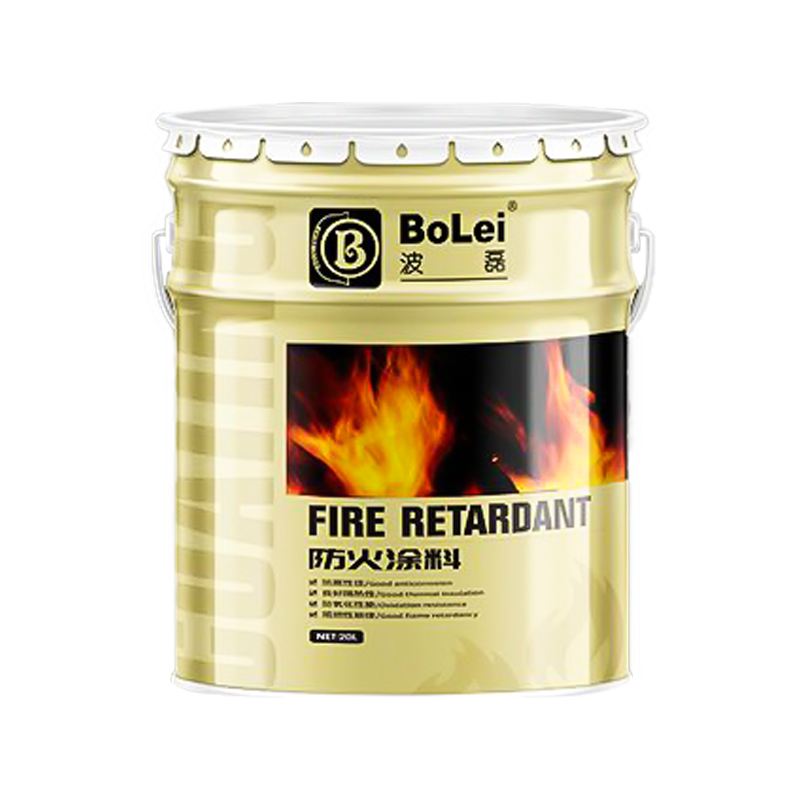
fireproof coatings (typically referring to intumescent fire-resistant coatings) remain inert at room temperature. When a fire occurs and the ambient temperature rises to approximately 175°C to 200°C, the internal chemistry of the coating triggers a reaction, forming an expanded carbonaceous char layer. This char layer possesses very low thermal conductivity, creating an effective physical insulation barrier that significantly slows the transfer of heat to substrates such as steel structures or wood, thereby maintaining the load-bearing capacity of the structure for the rated duration.
Core Significance of the CAN/ULC-S101 Standard
The CAN/ULC-S101 standard for fireproof coatings is an authoritative test method for measuring the ability of building materials and assemblies to withstand fire for a specified period while maintaining structural integrity. This standard evaluates the performance of coatings in extreme environments by simulating real-world fire temperature curves.
For steel structures, the CAN/ULC-S101 standard for steel structure fireproof coatings mainly evaluates the material's ability to control temperature rise during fire exposure, preventing the reduction of steel yield strength caused by increased temperatures. For substrates such as wood, relevant tests focus on how fire-resistant coatings reduce flame spread rates and protect the internal structure of the material.
CAN/ULC-S101 Certification Process and Compliance Points
how to obtain ulc certification for fireproof coatings is a major focus for many manufacturers. The certification process is rigorous and highly technical, involving the following main steps:
Sample Preparation and Testing: Fireproof coatings are applied to specified substrates at designated dry film thicknesses (DFT) and placed in a controlled industrial furnace for testing.
Fire Simulation and Data Monitoring: In the CAN/ULC-S101 test, samples are subjected to standard time-temperature curve exposure and, if required, fire hose stream tests.
Performance Indicator Verification: The focus of the test is on structural integrity, temperature thresholds (preventing heat conduction), and coating adhesion performance.
Third-Party Audits and Listing: Upon passing the tests, an accredited testing laboratory issues a report, establishes a product listing, and officially grants the certification qualification.
Optimization and Application Excellence: fireproof coatings
Maximizing the performance of fireproof coatings requires more than just high-quality raw materials; it demands precise site-specific application strategies. As a manufacturer, we provide the technical depth necessary to ensure your project meets the CAN/ULC-S101 standard for fireproof coatings under diverse environmental conditions.
Environmental & Application Performance Matrix
Selecting the right fireproof coating for wood or steel involves balancing substrate porosity, environmental humidity, and curing time. The following table provides guidance for field technicians:
| Condition Factor | Steel Application Requirement | Wood Application Requirement |
| Ambient Temp Range | 10°C to 35°C | 15°C to 30°C |
| Max Relative Humidity | 85% RH | 75% RH |
| Primer Compatibility | Required (Rust-inhibitive) | Not Required (Direct bond) |
To achieve CAN/ULC-S101 certification for fireproof coatings, projects must undergo rigorous assembly-level testing. We assist partners by providing certified dry-film thickness (DFT) schedules that correspond to the structural design requirements. Whether you are addressing the CAN/ULC-S101 standard for steel structure fireproof coatings or timber assemblies, our documentation ensures full transparency for building inspectors and regulatory authorities.
Pro-Tip for Technical Compliance
When inquiring how to obtain ulc certification for fireproof coatings for your specific project, always verify the steel "section factor" first. Coatings that pass the CAN/ULC-S101 test on a heavy column may require 30% more thickness on a thin-walled channel member. Reach out to our technical team for a detailed fire-rating calculation based on your structural design drawings.
Protection Strategies for Wood and Steel Structures using fireproof coatings
For fireproof coating for wood, testing includes not only the fire resistance limit but also surface burning characteristics, such as the flame spread index. The chemical composition of the coating must ensure good adhesion to the wooden substrate and maintain coating stability during expansion to prevent premature delamination.
For the application of fireproof coatings on steel structures, engineers should focus on the Section Factor (W/D or Hp/A). Steel members with higher section factors heat up faster and therefore require thicker fireproof coatings to achieve the same fire rating. In selecting products that have undergone the CAN/ULC-S101 certification process for fireproof coatings, it is imperative to verify that the chosen solution covers the section specifications required for the project.

 ENG
ENG
QUICK LINKS
CONTACT INFO
-
 +86-17681892007
-
 [email protected]
-
 No.495-497, Ngaqian Road, Ngaqian Town, Xiaoshan District, Hangzhou, China
QR CODE
Copyright © Zhejiang Bolei Coatings Co., Ltd.All Rights Reserved.
 Wholesale Industrial Steel Paint Manufacturers