


 English
 中文简体

 Home / News / Industry News / How Long Does Fireproof Paint Last? Service Life, Shelf Life & Maintenance
Industry News
How Long Does Fireproof Paint Last? Service Life, Shelf Life & Maintenance
2026-10-02
Content
- 1 Quick Answer: Expected Service Life by Coating Type
- 2 Two Different Clocks: Shelf Life vs. Service Life
- 3 What Determines How Long Fireproof Paint Actually Lasts?
- 4 Thin Intumescent vs. Thick Cementitious: Which One Lasts Longer?
- 5 How Environment and Project Type Change the Timeline
- 6 Inspection Schedule: Turning 20 Years Into a Plan
- 7 Repair and Reapplication: Patch Early, Replace Late
- 8 How to Specify Fireproof Paint for a Long Service Life
- 9 Frequently Asked Questions About Fireproof Paint Lifespan
- 9.1 How long does fireproof paint last on structural steel?
- 9.2 How often does fireproof paint need to be reapplied?
- 9.3 Does fireproof paint expire in the can?
- 9.4 The rating says 120 minutes — 120 minutes of what?
- 9.5 Can you paint over fireproof coating to change the color?
- 9.6 Does humidity or outdoor weather shorten fireproof paint life?
- 9.7 How do I know if my fireproof coating needs repair?
- 9.8 Is thicker always better for longevity?
If you coat structural steel with a properly specified fireproof paint today, you should expect that coating to do its job for 10 to 25 years — and in dry, concealed voids, thick cementitious and gypsum-based coatings routinely stay in service for 20 to 30 years or longer. Thin-film intumescent coatings on exposed architectural steel typically deliver 10 to 20 years before their first significant refurbishment, while decorative fire-retardant paints on timber and escape routes sit at the shorter end: roughly 5 to 10 years indoors, and less on weathered exterior wood.
The confusion around this question exists because "how long fireproof paint lasts" actually answers three different questions at once. How many years does the film survive on the structure (service life)? How long does the product keep in a sealed pail before you apply it (shelf life)? And how many minutes does the coating hold back heat during an actual fire (the fire rating, typically 30 to 120 minutes in standard furnace tests)? A coating rated 120 minutes does not expire after 120 minutes of building life, and a coating that is 15 years old may still fully meet its tested rating — provided its dry film thickness and physical condition are intact.
This guide separates those three clocks, explains what shortens or extends each one, and then gives you realistic inspection intervals, repair rules, and specification checkpoints drawn from long-life steel coating projects — airports, rail stations, exhibition halls, data centers, and industrial plants among them.
10-25 yearsrealistic service life for structural fireproof coatings installed and maintained to specification
12-24 monthstypical sealed shelf life before application, depending on chemistry and storage conditions
30-120 minutesfire resistance the coating delivers in a standard fire, independent of the coating's calendar age
12 monthsrecommended interval between visual inspections of an installed fireproof coating
Quick Answer: Expected Service Life by Coating Type
The table below is the version our project team gives buyers who need a planning number rather than a datasheet recital. Treat the ranges as realistic field expectations for coatings applied at the specified dry film thickness (DFT) with a compatible primer and topcoat — not as warranty periods, which are always defined per product and per project.
| Coating Type | Typical Service Life | Fire Performance Delivered | Typical Locations | Maintenance Rhythm |
|---|---|---|---|---|
| Thin-film intumescent, solvent-based ultrathin grades | 10-20 years indoors with topcoat; 8-15 years semi-exposed | 30-120 minute ratings depending on DFT | Exposed structural steel in atria, stations, airport halls | Visual check every 12 months; DFT verification every 3-5 years |
| Thick-film cementitious, non-intumescent | 20-30+ years in dry, concealed interiors | 90-240 minute ratings at heavy builds | Plant rooms, ceiling voids, parking structures, hidden beams | Visual check every 12-24 months |
| Gypsum-based thick coatings, including two-component grades | 20+ years in dry interiors; sensitive to sustained moisture | Up to 180 minute ratings depending on build | Offices, hospitals, commercial buildings | Visual check every 12 months; inspect after any leak |
| Fire-retardant decorative paint for interior timber | 5-10 years | Flame-spread class rather than load-bearing rating | Escape routes, timber linings, doors | Re-coat per test report, often every 5 years |
| Fire-retardant paint for exterior wood | 2-5 years before refresh | Flame-spread performance, weathering dependent | Facades, pergolas, cladding | Annual inspection; refresh every 2-5 years |
Notice what the table does not do: it does not rank coatings by thickness alone. A 20 mm cementitious build and a 1 mm intumescent build can both carry a 120-minute rating on the right steel section — they reach the result through different chemistry, and they age differently, which the following sections explain.
Two Different Clocks: Shelf Life vs. Service Life
Conflating shelf life with service life is one of the most expensive mistakes in coating procurement, because it leads to stockpiling product that quietly passes its usable date in the warehouse, while the film applied on site was never the limiting factor. The two clocks run independently and fail for different reasons.
How Long Does Fireproof Paint Last in a Sealed Pail?
Most solvent-based thin-film intumescent coatings carry a sealed shelf life of 12 to 24 months, and water-based products typically sit near 12 months. Storage conditions decide whether you actually receive that full period: keep pails between roughly 5 and 30 degrees Celsius, out of direct sun, away from frost, and off damp concrete floors. A pail that has frozen and thawed, or one that has sat half-open for months, can lose stability even if the printed date has not passed.
Two-component systems behave differently. A two-component gypsum-based thick fire-retardant coating, for example, ships as a liquid component plus a powder that are mixed on site; once mixed, you have a working pot life of a few hours — commonly 2 to 4 — and no way to extend it. Powder components tolerate longer storage in dry conditions, but the liquid component still ages. For multi-phase projects, order in stages tied to the construction program instead of receiving the full quantity in month one, check batch numbers against the technical datasheet on delivery, and keep a retained sample from every batch. That sample settles disputes about application quality months later.
What Happens After the Coating Is Applied?
Once applied and fully cured — allow roughly 7 days for most solvent-based systems before final topcoating and before the area sees traffic — the coating enters its service life, and the clock that matters becomes physical condition, not calendar age. Adhesion to the primer, the actual achieved DFT, and the quality of the topcoat seal determine how the film handles humidity, UV, and knocks over the following years. This is why two projects coated in the same year with the same product can face very different refurbishment dates.
Rule of thumb: shelf life protects your inventory; dry film thickness protects your rating. Inspect the film, not the pail.
What Determines How Long Fireproof Paint Actually Lasts?
Ranked by real-world impact, five factors decide whether a fireproof coating reaches the upper end of its expected life: surface preparation and primer choice, dry film thickness control, topcoat compatibility, exposure conditions, and mechanical damage. In our experience, the first two are behind most premature failures we are asked to diagnose.
Surface Preparation and Primer Choice
Fireproof paint is a system, not a single can. On structural steel, preparation to Sa 2.5 (blast cleaning) or at minimum St 3 (power tool cleaning) removes mill scale and rust that would otherwise detach and take the coating with them. The primer must be one the fireproofing manufacturer has tested for compatibility — epoxy zinc-rich primers at around 60 to 80 micrometers DFT are the workhorse choice for steel that also needs corrosion protection, which in real buildings is nearly always the case.
Incompatibility rarely shows up at handover. It appears three to seven years later as localized flaking, when moisture finds its way under the film. This is the failure mode most often traced back to a well-meant substitution — a different primer brand, or an untested intermediate layer — made during purchasing to save a small percentage of the package cost.
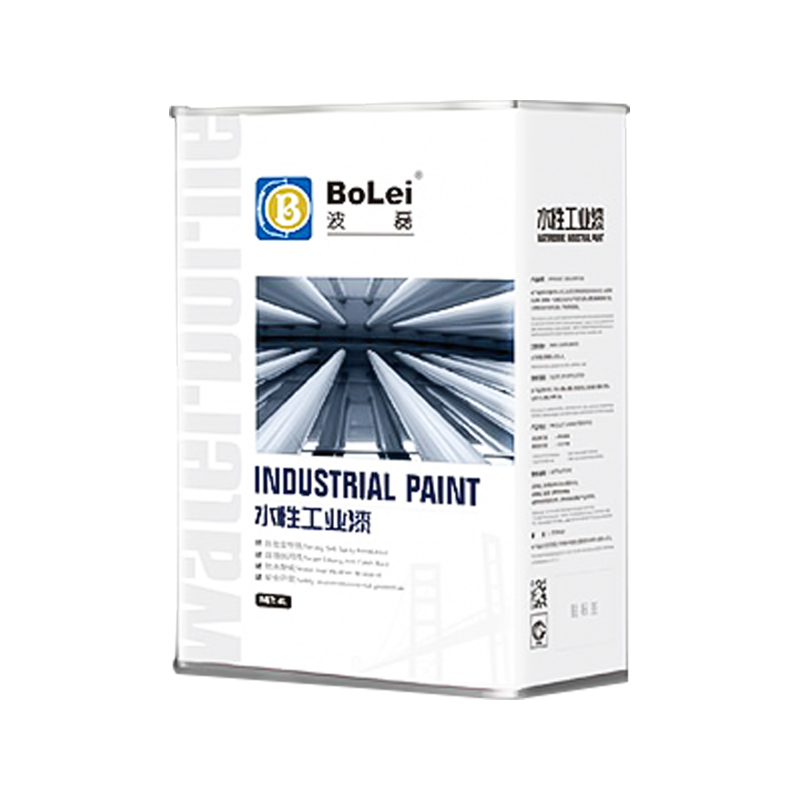 Epoxy Zinc-Rich Primer (80%) for Steel StructuresA two-component epoxy zinc dust primer offering cathodic protection, hardness, and abrasion resistance. Its tested compatibility makes it a reliable base coat, avoiding the premature flaking caused by untested primer substitutions in fireproofing systems.View Product →
Dry Film Thickness: The Number Your Rating Depends On
A fire rating is certified at a specific dry film thickness for a specific steel section factor. The same 60-minute rating might need roughly 0.6 mm of intumescent film on a heavy column and closer to 1.4 mm on a slender, high section-factor beam; 120-minute ratings commonly fall in the 1.5 to 3 mm range. Applying "somewhere near" the schedule number is not enough — inspectors measure, and short film means the rating documented in the fire strategy does not actually exist on the steel.
Control it with wet film thickness checks during application, converted to DFT using the product's volume solids, then verified with a gauge after cure. We advise applicators to target 10 to 15 percent above the minimum required DFT to absorb measurement scatter and sanding of high spots. Log the readings per member number; a thickness log produced at handover is the single most useful document for insurance audits and for any future refurbishment quotation.
Topcoat Compatibility and UV Exposure
Intumescent films are formulated to expand, which means their surface is softer and more absorbent than a standard decorative enamel. The wrong topcoat does not just look poor — it can interfere with expansion or soak into the film. Use topcoats that the fireproofing assessment names as compatible, typically water-based acrylic or two-pack polyurethane at 60 to 80 micrometers, and never apply alkyd enamels directly over epoxy or zinc-rich layers: saponification between chemically mismatched layers causes adhesion loss that becomes visible within a few years.
Outdoors, UV attacks the topcoat first. A chalked, faded topcoat does not mean the fireproof layer beneath is finished, but it has lost its water-shedding function — and water is what degrades intumescent film. Refreshing a weathered topcoat every 7 to 10 years on exterior steel is a small cost that protects a much larger fireproofing investment.
Moisture, Humidity, and Corrosivity Class
Match expectations to the environment using the ISO 12944 corrosivity framework: a heated, dry interior (C1) is a benign home for any fireproof coating; humid indoor pools, food plants, and unheated warehouses (C2-C3) demand sealed systems and stricter inspection; coastal and heavy industrial sites (C4-C5) shorten every coating's life and push maintenance intervals toward the lower bounds in the tables above. Cementitious and gypsum coatings in wet or wash-down areas need full sealing or enclosure — sustained moisture is their only serious enemy indoors.
Mechanical Damage: The Most Common Cause of Early Repair
Across our project records, the most frequent reason a five-year-old fireproof coating needs attention is not weather or chemistry — it is other trades. Electricians and mechanical contractors penetrate coated beams to hang cable trays and ductwork, forklifts clip columns in logistics halls, and suspended ceilings get opened and scraped. Every penetration and scrape removes film exactly where the rating depends on it. Writing coating protection into the construction sequence, and scheduling a touch-up round after all other trades finish, costs far less than re-certifying film later.
Thin Intumescent vs. Thick Cementitious: Which One Lasts Longer?
As a straight calendar answer, thick-film cementitious and gypsum coatings last longer in dry, concealed locations — 20 to 30 years and beyond is routine — because their inert, mineral composition has little to age. Thin-film intumescent coatings trade some of that calendar life for a smooth, paint-like finish that keeps architectural steel visible; with a sound topcoat and scheduled inspection, 10 to 20 years before the first refurbishment is a realistic expectation.
| Comparison Factor | Thin-Film Intumescent | Thick-Film Cementitious / Gypsum |
|---|---|---|
| Applied film build | Roughly 0.5-3 mm depending on rating | Roughly 10-50 mm depending on rating |
| Appearance | Smooth, paint-like; suits exposed steel | Textured, bulky; usually concealed or enclosed |
| Typical service life | 10-20 years with topcoat and inspection | 20-30+ years in dry concealed interiors |
| Weight added to steel | Very light | Significant; density around 400-800 kg per cubic meter |
| Where it lasts longest | Dry interiors with sound topcoat | Dry, undisturbed voids and plant rooms |
| Refurbishment | Easy localized patch repair | Bulkier repair; infrequently needed |
| Cost profile | Higher per square meter at 90-120 minute ratings | Lower material cost at high ratings, more dead load |
Intumescent chemistry is worth understanding when you plan inspections: at roughly 170-200 degrees Celsius the film swells and chars into an insulating foam layer many times its applied thickness. Our ultrathin grade is formulated for 20-times expansion, so a 1 mm dry film can grow into an insulating char of roughly 20 mm — which is exactly why millimeter-level film damage matters, and why prompt patch repairs restore the rating instead of hiding the problem.
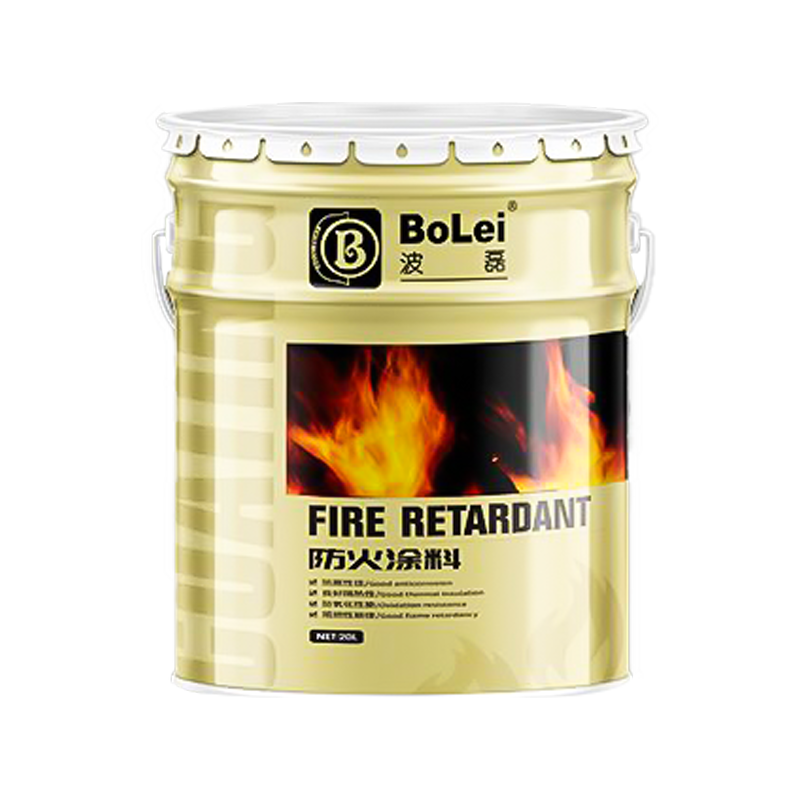 Ultra-Thin Intumescent Fireproof Coating with 20x ExpansionThis intumescent coating swells at 170-200°C into an insulating char about 20 times its applied film, protecting steel with minimal thickness. Its thin film suits visible architectural steelwork where cementitious bulk would be unacceptable.View Product →
Thick cementitious coatings protect differently: a dense mineral blanket slows heat reaching the steel without any reaction taking place. There is no char to exhaust and very little to age in a ceiling void or plant room, which is why designers accept the bulk and weight on hidden steel. If you are weighing the two technologies for a specific frame, it helps to first read how cementitious and intumescent fireproof coatings protect steel and where each system fits best.
Quick selection logic: for steel you can see, choose intumescent; for steel you cannot see, thick cementitious or gypsum usually wins on service life and cost.
How Environment and Project Type Change the Timeline
Location within the building moves the numbers more than most buyers expect. The same product can run 25 years in one zone of a project and need a topcoat refresh within eight in another. Breaking the building into exposure zones is the practical way to plan a maintenance budget.
Dry, Concealed Interiors: The Longest Service Life
Ceiling voids, plant rooms, parking structures, and concealed roof trusses are the gentlest environment a coating can have: stable temperature, no UV, no wash-down. Thick mineral coatings specified in these zones are realistically 20 to 30-year assets, and their main threats are trade damage and roof leaks — both of which an annual visual walk-through will find. This is the zone where cementitious products earn their keep.
Exposed Architectural Steel: Fire Protection on Display
Atria, station halls, airport terminals, and stadium bowls keep steel visible, so the coating must look good for years as well as perform. On long-life public projects — the Hangzhou International Expo Center Phase II paint and fireproof coating package is a representative example — intumescent systems are paired with hard, cleanable topcoats precisely because the film will be visually inspected by every visitor, whether or not they know what they are looking at. Plan on 10 to 20 years of film life with topcoat renewal in between.
Coastal, Industrial, and Semi-Exposed Conditions
Salt-laden coastal air, chemical plants, and canopied but unenclosed steel compress every interval: expect topcoat maintenance every 5 to 8 years, verify DFT more frequently, and treat any rust staining at coating edges as urgent — corrosion spreading under fireproof film destroys adhesion long before it becomes obvious from a distance.
Across the project types we coat — airport terminals and cargo hubs, high-speed rail stations, data centers, hospitals, exhibition centers, and automotive plants — the pattern is consistent: environment and traffic, not paint brand, decide the maintenance curve. Data centers and hospitals rarely disturb coatings after handover and see long service life; logistics and production halls need scheduled touch-up rounds because daily operations keep finding the steel.
Inspection Schedule: Turning 20 Years Into a Plan
Fireproof coatings rarely fail suddenly; they fail visibly, early, and locally. A light inspection routine catches problems while they are still cheap patch repairs instead of contract discussions.
- Annually — walk every visible coated area; look for cracks, flaking, rust staining at edges, dents, and water trails from above.
- Every 3 to 5 years — verify DFT with a gauge on representative members and compare the readings against the handover thickness log.
- After every trade penetration — check each new hanger, bracket, or service opening; rebuild the film and topcoat immediately.
- After any leak or flood — dry the zone, then inspect it; gypsum-based coatings are the most moisture-sensitive of the family.
- Before any change of building use — a new occupancy class may demand a different rating, which is a design question before it is a paint question.
- After any fire in or near the building — replace intumescent film on exposed members even if it looks intact; expanded char cannot reactivate a second time.
| Trigger Event | What to Inspect | Typical Action |
|---|---|---|
| Annual inspection round | Cracks, flaking, rust staining, impact marks, water trails | Log findings; schedule patch repairs within the quarter |
| Trade penetration or new services | Film continuity around every new fixing and opening | Rebuild DFT locally and reinstate topcoat |
| Roof or pipe leak above coated steel | Moisture staining, soft spots, edge lifting | Dry, assess adhesion, repair affected zone |
| Fire event in or near the area | Any expanded or heat-discolored coating | Replace intumescent film regardless of appearance |
| Change of building use | Rating requirement against current DFT schedule | Engineering review before any coating work |
Repair and Reapplication: Patch Early, Replace Late
Full removal and reapplication of fireproof coating is rare. What building owners actually need is a disciplined patch-repair habit, plus honesty about the few situations that justify starting over.
Patch Repair in Six Steps
- Cut back to sound, well-adhered film around the damage and feather the edges.
- Clean the exposed steel and prime bare metal with the system primer.
- Rebuild the intumescent or thick coating to at least the specified DFT, with the same 10-15 percent application margin used on new work.
- Allow full cure — a patch is not finished until the film is hard through its complete thickness.
- Reinstate the topcoat over the repair and blend it into the surrounding area.
- Record the member number, thickness readings, and date in the same log used at handover.
When a Full Recoat Is Justified
Plan a system renovation when damage covers a large share of the area, when the topcoat has failed broadly and moisture has reached the film in multiple zones, or when a change of use requires a higher rating than the original system can certify. One rule has no exceptions: after a real fire, intumescent coating that has expanded is spent — it is replaced, not recoated, regardless of how intact it looks. Thick cementitious coatings that were not directly engaged by the fire can often be assessed, cleaned, and retained.
How to Specify Fireproof Paint for a Long Service Life
Most longevity problems are purchased at the specification stage, long before the first pail is opened. These checkpoints cost nothing to include and remove the classic failure routes:
- Ask for the fire test or assessment report (ASTM E119 / UL 263, EN 13381, or GB 14907) stating the rating, section factor, and required DFT for your member types.
- Require a DFT schedule per member group, not a single "as required" line in the bill of quantities.
- Demand written primer and topcoat compatibility statements for the exact combination you are buying.
- Check sealed shelf life and mixed pot life on the datasheet against your construction program.
- Specify wet film checks during application and gauge-verified DFT logging at handover.
- Write the inspection intervals into the maintenance contract, not into a brochure.
- Keep retained samples per batch and record batch numbers in the handover file.
- Use qualified applicators — most film defects trace back to application practice, not chemistry.
Frequently Asked Questions About Fireproof Paint Lifespan
How long does fireproof paint last on structural steel?
Plan on 10 to 20 years for thin-film intumescent systems on exposed steel, and 20 to 30 years or more for thick cementitious or gypsum coatings in dry, concealed voids — assuming correct DFT, a compatible primer and topcoat, and annual inspections.
How often does fireproof paint need to be reapplied?
There is no fixed calendar for full reapplication. Interior systems mainly need localized patching as damage occurs; exterior steel typically needs topcoat renewal every 5 to 10 years, while the fireproof film itself stays in service considerably longer.
Does fireproof paint expire in the can?
Yes — sealed shelf life is typically 12 to 24 months depending on chemistry and storage. Two-component products also carry a mixed pot life of a few hours. Apply product within its stated shelf life and store pails between roughly 5 and 30 degrees Celsius.
The rating says 120 minutes — 120 minutes of what?
Of fire resistance in a standard furnace test, not years of service. A 120-minute coating holds steel below its critical temperature for two hours in a fire, and it retains that capability throughout its service life as long as thickness and condition are maintained.
Can you paint over fireproof coating to change the color?
Only with a topcoat named as compatible in the product's assessment. Use light coats of the approved acrylic or polyurethane finish, never solvent-heavy alkyds, and do not sand or scrub the intumescent film — its thickness is the rating.
Does humidity or outdoor weather shorten fireproof paint life?
Moisture is the main aging factor after mechanical damage. Dry interiors allow the longest life; humid, coastal, or wash-down environments shorten maintenance intervals and make a sound topcoat and stricter inspection essential.
How do I know if my fireproof coating needs repair?
Look for cracks, edge lifting, flaking, rust staining, dents, or water trails. Any exposed steel or a measured point short of the schedule DFT means the rating is locally absent until a patch repair restores it.
Is thicker always better for longevity?
No. Thickness beyond the tested schedule adds cost and weight without adding rating, while insufficient thickness voids the rating. Apply the certified DFT for your section factor plus a small application margin, and then maintain it.
If you are budgeting a steel structure project and want service-life numbers attached to real products rather than generic ranges, our engineering team prepares DFT schedules, primer and topcoat matching, and maintenance interval plans based on each building's exposure class. You can also review the full fireproof coatings range, or request electronic RAL, NCS, and CBCC color cards to coordinate the fire protection system with the architectural finish palette from the start.

 ENG
QUICK LINKS
CONTACT INFO
-
 +86-17681892007
-
 [email protected]
-
 No.495-497, Ngaqian Road, Ngaqian Town, Xiaoshan District, Hangzhou, China
QR CODE
Copyright © Zhejiang Bolei Coatings Co., Ltd.All Rights Reserved.
 Wholesale Industrial Steel Paint Manufacturers