


 English
 中文简体

 Home / News / Industry News / Fire-Resistant Paint vs Fire Retardant Paint: Differences, Uses and Ratings
Industry News
Fire-Resistant Paint vs Fire Retardant Paint: Differences, Uses and Ratings
2026-10-09
Content
- 1 The Short Answer: Two Coatings, Two Different Jobs
- 2 What Is Fire-Resistant Paint?
- 3 What Is Fire-Retardant Paint?
- 4 Fire-Resistant vs Fire-Retardant Paint: A Side-by-Side Comparison
- 5 How Building Codes and Inspectors Treat Each Coating
- 6 A Practical Selection Checklist
- 7 What Separates a Compliant Installation from a Rejected One
- 8 Where Each Coating Earns Its Keep on Real Projects
- 9 Frequently Asked Questions
- 9.1 Can fire-retardant paint replace fire-resistant paint on structural steel?
- 9.2 Is intumescent paint fire-resistant or fire-retardant?
- 9.3 How long does fire-resistant paint last?
- 9.4 Can you paint over fire-resistant or intumescent coatings?
- 9.5 Does fire-resistant paint make steel fireproof?
- 9.6 How thick is a two-hour fire-resistant coating?
- 9.7 Can fire-resistant and fire-retardant coatings be used outdoors?
- 9.8 What should I send a manufacturer when asking for a quotation?
A steelwork package for a new warehouse lands on your desk. Line one of the finish schedule reads: "Structural steel — fire-resistant coating, 90-minute rating." Four lines below, under interior linings, reads: "Timber partition faces — fire-retardant paint, Class A flame spread." The phrases look interchangeable, the products on a supplier's shelf often sit side by side, and yet they describe coatings that are formulated, tested and certified for entirely different jobs. Buy the wrong family and the consequences are concrete: a failed inspection, a strip-and-recoat at your cost, or a building that is only protected on paper.
Here is the direct answer. Fire-resistant paint is a passive insulating barrier — usually a thick cementitious or gypsum-based coating applied in millimetres — whose job is to keep load-bearing steel below its critical temperature for a tested period, typically 30 to 240 minutes. Fire-retardant paint is a surface treatment applied at decorative thickness that delays ignition and slows flame spread across combustible materials such as timber and plasterboard. Then there is intumescent coating: a thin reactive film that foams into insulating char when heated. It is functionally a fire-resistant system for steel, yet it is routinely marketed as "fire-retardant paint", and that overlap is the single largest source of confusion on procurement documents.
The Short Answer: Two Coatings, Two Different Jobs
The rule we give every specifier who asks us this question is simple: never buy by the name printed on the drum — buy by the test report behind it. Marketing labels drift between "fire resistant", "fire retardant" and "fireproof" freely; certificates do not. The standard number on the report tells you what the coating was actually proven to do, and on which substrate.
Rule of thumb: if the coating protects something that carries load — a column, a beam, a roof truss — you need a fire-resistant system certified under a furnace standard such as ASTM E119, UL 263, BS 476-21 or EN 13501-2. If it protects a surface from igniting and spreading flame — timber cladding, a partition lining, an escape route — you need a fire-retardant product judged by flame-spread tests such as ASTM E84 or EN 13501-1.
Fire-Resistant Paint at a Glance
- Protects structural elements for a rated period, commonly 30 to 240 minutes
- Thick-film and non-intumescent: cementitious or gypsum binders, typically 8–50 mm dry thickness
- Works by insulation: low thermal conductivity plus water released as steam from the film
- Certified per element with R-ratings: R30, R60, R90, R120
- Standard on steel in airports, rail hubs, plant rooms, car parks and factories
Fire-Retardant Paint at a Glance
- Delays ignition and slows flame travel across combustible surfaces
- Thin film at decorative thickness, often under 1 mm
- Works through char formation and flame-inhibiting chemistry
- Judged by flame-spread classes: Class A, B or C under ASTM E84, or Euroclasses under EN 13501-1
- Typical on timber linings, escape routes, partitions and interior fit-outs
Both are legitimate, complementary fire safety products. Neither one makes a material "fireproof" — nothing does. The honest distinction is what each coating is asked to do during a fire: fire-resistant paint buys the structure time under load so people can evacuate and firefighters can work; fire-retardant paint tries to stop a small flame from becoming a room fire in the first place.
What Is Fire-Resistant Paint?
Fire-resistant paint belongs to the family engineers call passive fire protection. It does not need to survive the fire untouched; it needs to slow heat down. Most products quoted under this name use one of two binder systems — Portland-cement-based or gypsum-based — loaded with lightweight aggregates such as vermiculite and perlite, plus fire-resistant fillers. Where decorative wall paint is measured in microns, these coatings are applied in millimetres: commonly 8 to 50 mm of dry film, depending on the rating required and the geometry of the steel underneath.
How the Insulating Barrier Works
Three mechanisms do the work. First, the cured coating is a poor conductor of heat, so temperature crawls across its thickness instead of jumping it. Second, the sheer mass acts as a heat sink — there is a lot of material to warm up. Third, gypsum releases its chemically bound water when heated (roughly a fifth of gypsum's weight is water locked into the crystal structure), and turning that water to steam absorbs a large amount of energy. The payoff: instead of losing strength within minutes, protected steel — which weakens significantly once it passes around 500–550 °C — stays structurally useful while the test furnace around it passes 800 °C within roughly 15 minutes and approaches 1,000 °C at the one-hour mark.
One detail surprises many first-time buyers: the required thickness is never a single number. Manufacturers publish certified thickness tables calculated from the section factor of each member — the ratio of its heated surface to its cross-sectional mass of steel. A stocky box column and a slender I-beam can need very different films for the same 90-minute claim. A quotation that includes a member-by-member thickness schedule is a compliant quotation; one that quotes a single generic thickness is a guess wearing a safety hat.
The Ratings You Will See in a Specification
Look for designations such as R30, R60, R90, R120 or R180. The R stands for load-bearing capacity: an R90 beam must still carry its design load 90 minutes into a standard fire, which is a far more demanding claim than simply "not burning". The matching test methods are ASTM E119 and UL 263 in North America, BS 476-21 in the United Kingdom, and EN 13381 with EN 13501-2 classification across much of Europe and Asia. Crucially, the whole build-up is certified together — primer, fireproof coat, reinforcement mesh where the thickness demands it, and any sealer or enclosure. Substitute one unlisted component and, strictly speaking, the rating no longer exists.
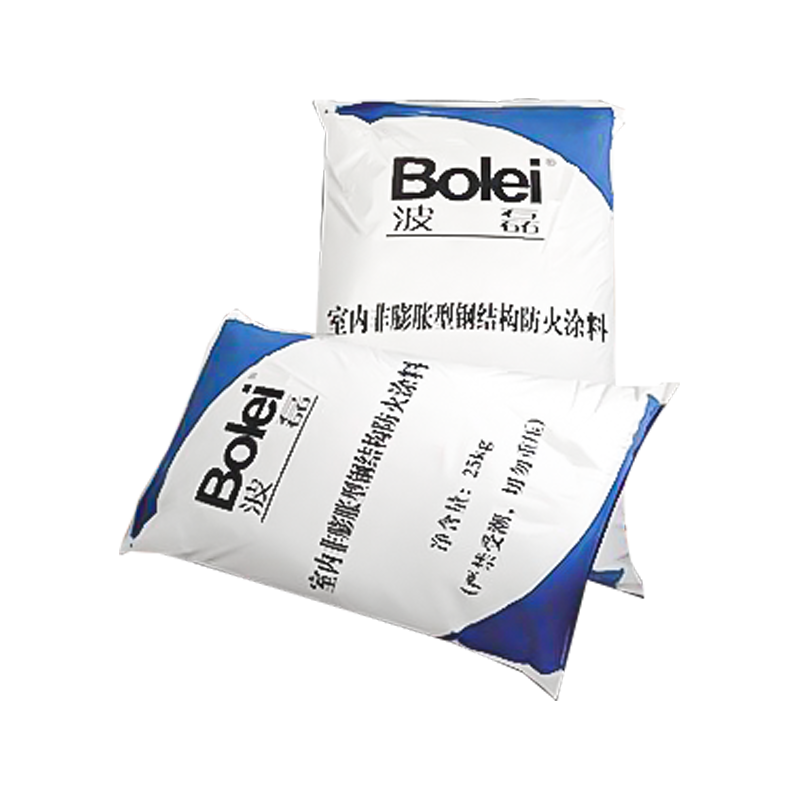 Cement-Based Thick Fireproof Coating for Steel StructuresThis dense, humidity-tolerant coating suits concealed structural steel in terminals, plants and car parks, delivering certified fire resistance periods such as R90 or R120 at a practical cost per square metre.View Product →
Cement-based products are the workhorses of this category. They are dense, mechanically tough, tolerant of humid plant rooms, and suitable for semi-exposed and exterior steel once sealed or enclosed as the listing requires. This is the coating you find on concealed frames at airport terminals, rail hubs, data centres, car parks and process plants — anywhere a rough grey finish is acceptable and cost per square metre is under pressure. Where budgets allow scrutiny, ask about density as well: lightweight mixes of roughly 300–500 kg/m3 apply faster and weigh less on older structures, while higher-density mixes buy better resistance to knocks and scuffs.
Gypsum-Based Thick Fire Retardant CoatingLighter and smoother than cement-based options, this coating applies quickly, meets fire resistance requirements over three hours, and suits public interiors like offices, hospitals, exhibition halls and transport hubs.View Product →
Gypsum-based coatings trade a little mechanical ruggedness for weight, speed and finish. They apply faster, weigh less per square metre, and leave a smoother face that accepts enclosure boards and decoration happily, which is why they dominate in offices, hospitals, conference venues and other public interiors. Two-component gypsum products give applicators control over setting time on large areas of work — a quiet but real advantage on a fast-track programme.
Typical homes for fire-resistant paint include:
- Structural steel frames in terminals, stations, arenas and exhibition halls
- Plant rooms, basements, car park decks and service risers
- Roof trusses above assembly spaces where the steel is hidden but still rated
- Industrial facilities with high fire loads, such as process and power plants
What Is Fire-Retardant Paint?
Fire-retardant paint attacks the earliest phase of a fire: ignition and the first minutes of flame travel. It is not trying to hold a beam up; it is trying to stop a small flame from becoming a room fire. The common chemistry leans on phosphorus and nitrogen compounds, borates and similar additives that, under heat, push the surface to char instead of burn, and release radicals or gases that interfere with combustion in the flame zone. At decorative thickness — often well under a millimetre — it looks and behaves like ordinary paint right up until the moment it meets a flame.
Flame-Spread Classes Explained
Performance is expressed in flame-spread classes. In North America, ASTM E84, the Steiner tunnel test, produces a Flame Spread Index: Class A covers 0–25, Class B is 26–75, Class C is 76–200, and most interior specifications call for Class A or B on wall and ceiling linings, usually alongside a smoke-developed limit. In Europe and much of Asia, the Euroclasses of EN 13501-1 — from A1 at the top down to F — serve the same role, often with smoke (s) and droplet (d) suffixes. One procurement trap deserves bold type: the class belongs to the tested system on the tested substrate. A Class A certificate earned on gypsum board does not automatically transfer to pine cladding, and a supplier who implies otherwise is telling you something useful about their paperwork.
Where Intumescent Coatings Fit, and Why the Labels Collide
Intumescent paint is the reason the two terms get tangled. It is a reactive thin film: at roughly 200–280 °C the coating softens and expands — a well-formulated product will swell to 20 or more times its applied thickness — into a low-density carbonaceous char. That char is, in effect, a miniature version of the thick cementitious barrier described above, and it can carry a genuine structural rating: R60 and R90 are routine, R120 is achievable with the right build. So an intumescent coating is functionally fire-resistant for steel, yet it is sold as "fire-retardant paint" in many markets because the word "retardant" is more familiar. When a specification says "fire-retardant paint for steel, R60", the product being described is almost certainly intumescent; when the same words sit against a timber substrate, it is a flame-spread product. The substrate decides, not the adjective.
The commercial appeal is easy to explain. One to two millimetres of intumescent film can replace tens of millimetres of cementitious material, it goes on smooth, and it can be finished in a chosen colour — so exposed columns in atriums, terminal roof trusses, stadium ribs and showroom steel keep their architecture. The trade-offs are price per litre, sensitivity to applied thickness, and dependence on an approved topcoat in exposed locations.
If you want a structured walk-through of the two steel-protection philosophies — including where each one is the smarter specification — our guide on how cementitious and intumescent fireproof coatings protect steel covers that decision in detail.
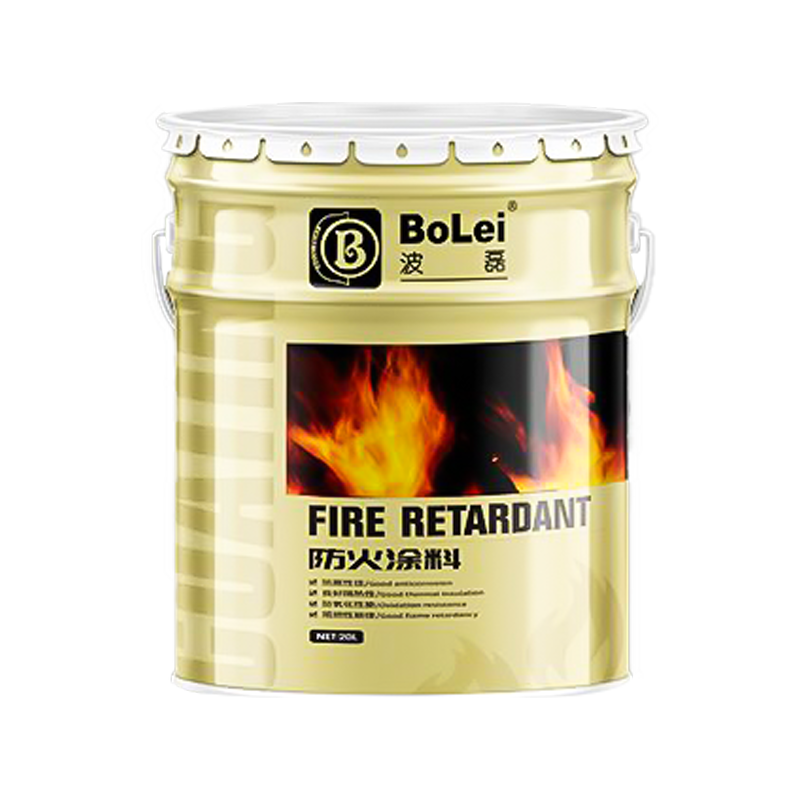 Ultra-Thin Intumescent Fireproof Coating with 20x ExpansionFor projects needing a thin dry-film finish, this intumescent coating expands in fire to insulate steel, applied in controlled passes with wet-film checks to reach the specified thickness.View Product →
Solvent-based and water-based intumescent formulas divide along practical lines: solvent-based products generally tolerate humidity during application and cure to a harder film, while water-based versions are friendlier to indoor air quality and clean-up. Either way, wet-film thickness is checked after every pass, because a dry-film target of a few hundred microns cannot be judged by eye once the coating has levelled.
Fire-Resistant vs Fire-Retardant Paint: A Side-by-Side Comparison
The table below condenses everything above into the lines that actually move a purchase decision. Put it next to the specification and tick each row before approving an order — the lower rows, where failure modes live, matter as much as the top ones.
| Consideration | Fire-Resistant Paint (Thick, Non-Intumescent) | Fire-Retardant Paint (Thin Film) |
|---|---|---|
| Core job | Keeps load-bearing members below critical temperature for a rated period | Delays ignition and slows flame spread across surfaces |
| Main substrates | Structural steel, some concrete elements | Timber, plasterboard, partitions; intumescent variants also on steel |
| Typical dry thickness | Approximately 8–50 mm | Decorative thickness under 1 mm; intumescent roughly 0.4–3 mm by rating |
| Working mechanism | Insulation, heat sink, steam release from bound water | Char formation and flame-inhibiting chemistry; intumescent foams to insulate |
| Pass criteria | Furnace tests: ASTM E119, UL 263, BS 476-21, EN 13501-2 | Flame-spread tests: ASTM E84 classes, EN 13501-1 Euroclasses |
| What the certificate states | R30/R60/R90/R120 for a specific element design | Flame-spread class on a stated substrate |
| Appearance | Rough and grey; usually sealed, enclosed or topped | Smooth and tintable; looks like decorative paint |
| Cost driver | Volume of material; cost per square metre rises with the rating | High price per litre, but very low consumption |
| Best-fit locations | Plant rooms, car parks, concealed steel, industrial plants | Escape routes, timber structures, exposed architectural steel |
| Common failure mode | Thickness below schedule or poor adhesion to the primer | Unapproved topcoat, wrong substrate, over-thick decorative overcoats |
Thickness figures above are indicative ranges drawn from common product listings and test standards; the certified thickness table calculated for your specific steel sections is the only number that belongs in a contract.
If the comparison has a single takeaway, it is this: the two coatings are not better or worse than each other, because they are not competing for the same job. Comparing them on price per litre is like comparing a raincoat with a life jacket because the raincoat is cheaper.
How Building Codes and Inspectors Treat Each Coating
Codes treat the two coatings as different animals because they sit in different chapters of the fire strategy. Structural fire protection exists to maintain stability: columns, beams and bracing must hold the building up long enough for evacuation and firefighting. Interior finish rules exist to protect life at the surface: linings must not accelerate flame across a room or along an escape route. One is about the skeleton, the other about the skin.
On site, a surveyor's checklist for a fire protection coating usually comes down to four items:
- A current listing or test report from an accredited body, matching the product, substrate and rating claimed
- A thickness schedule for the actual steel sections installed, derived from section factors
- Applicator records plus dry-film-thickness readings taken during the works
- Proof that any primer, mesh or topcoat used is part of the same certified system
The classic rejection is understandable but expensive. A contractor, told to "paint the steel fire retardant", buys a decorative flame-spread product and rolls it onto columns. It dries beautifully and even carries a certificate — for flame spread on timber. It contributes nothing measurable to the R-rating of the frame, the inspection fails, and the whole application comes off. One line of the test report, checked against the substrate and the required rating, prevents the entire scenario.
A Practical Selection Checklist
Run this sequence before requesting quotations. It takes ten minutes and removes most of the ambiguity that later turns into disputes:
- Confirm the substrate and its structural role: load-bearing steel points to fire-resistant or intumescent systems, while combustible linings point to flame-spread products.
- Extract the required performance from the fire strategy — an R-rating for structural members, a flame-spread class or Euroclass for linings.
- Fix the exposure: interior dry, interior humid, semi-exposed or exterior. This decides the binder family and whether a protective topcoat is mandatory.
- Set the aesthetic constraint honestly. If the steel stays visible, thin-film intumescent in a specified colour wins; if it hides above ceilings, thick cementitious wins on cost.
- Ask every supplier for the certified thickness table for your members, not a generic brochure figure.
- Verify the complete system: primer, fireproof coat, reinforcement and sealer or topcoat must be listed together.
- Agree the inspection plan in writing: reading density per area, acceptance criteria, and what happens when readings fall short.
What Separates a Compliant Installation from a Rejected One
Certified products still fail when they meet the wrong surface or the wrong thickness. In steel fire protection, preparation follows the same logic as anticorrosion work: abrasive blasting to a clean standard where specified, degreasing, and a compatible primer. Epoxy zinc-rich primers are widely used beneath both thick and thin fireproof systems, but the adhesion pairing must be verified through the system certificate rather than assumed — primers are the quietest source of disputes we see.
Thick cementitious and gypsum coatings are spray-applied, sometimes trowelled, and reinforced with mesh once the per-pass or total thickness exceeds the value in the data sheet — commonly somewhere in the 10–25 mm range. Curing conditions matter more than applicators expect: gypsum dislikes freezing mornings, cementitious products need moisture management in heat, and dusty soffits quietly destroy bond strength.
Thin intumescent films are applied by airless spray in multiple passes, with wet-film thickness checked after each one, because a dry-film target of a few hundred microns per coat cannot be judged by eye. Topcoating follows the manufacturer's approved list only. A random decorative enamel over an intumescent film can crack the char, restrict expansion, or simply become the reason a surveyor rejects otherwise correct work.
On the purchasing side, the same risks reappear project after project:
- Certificates copied from another product or an expired listing
- Quotations priced per kilogram with no thickness schedule, hiding real volume differences
- "Universal" coatings claiming that one document covers every substrate and rating
- No batch traceability between the drums delivered and the sample that was tested
- Decorative overcoats applied with no written approval from the fireproofing supplier
Three documents to request before signing: the current test report number and its validity, the thickness schedule calculated for your actual steel sections, and the written list of approved primers and topcoats. A manufacturer with genuine rated-project experience produces all three within a day; hesitation is itself a data point.
Where Each Coating Earns Its Keep on Real Projects
Nothing explains the division of labour better than walking through a large public building. Concealed steel — above ceilings, inside plant rooms, behind soffits — is thick-film country: invisible, tough, cost-sensitive, judged only on the certificate. Exposed steel in the spaces visitors actually see — atrium columns, terminal roof trusses, stadium ribs, exhibition-hall arches — is where thin-film intumescent justifies its price per litre by disappearing into the architecture.
Our own project record repeats the pattern. On the Hangzhou International Expo Center Phase II paint and fireproof coating project, rated systems and decorative scopes ran through one programme, with materials and thicknesses chosen member by member rather than across the board. The same split shows up across the airport terminals, rail hubs, hospitals, data centres and sports venues we have supplied: protected structure where no one looks, protected architecture where everyone does.
That breadth matters for one unglamorous reason: a manufacturer who supplies both coating families into these building types can tell you honestly when the cheaper thick coating is the right answer and when visible steel is worth the premium — instead of selling you whichever drum is nearest the loading bay.
Frequently Asked Questions
Can fire-retardant paint replace fire-resistant paint on structural steel?
Only if the product is actually an intumescent system with a structural rating — look for an R-value tested under ASTM E119, UL 263, BS 476-21 or EN 13501-2. A flame-spread certificate alone protects nothing that carries load. If the drum carries only a Class A flame-spread result, it cannot substitute for rated structural protection, and inspectors will reject the application.
Is intumescent paint fire-resistant or fire-retardant?
Functionally it is fire-resistant: it delivers a certified time rating for structural elements by expanding into an insulating char. Commercially it is often sold as fire-retardant paint because that word is more familiar. When comparing quotations, ignore the label and compare the test standard, the rating and the substrate named on the report.
How long does fire-resistant paint last?
Thick cementitious and gypsum systems are designed to last the life of the building in normal interior conditions — decades — provided they stay dry and undamaged. Intumescent systems are more sensitive to environment: interior films commonly serve for many years without attention, while exterior systems depend entirely on the certified topcoat and its maintenance. A visual inspection every two to three years, with prompt repair of cracks and impact damage, keeps the rating intact.
Can you paint over fire-resistant or intumescent coatings?
Yes, but only with primers, sealers or topcoats listed by the fireproofing manufacturer. Thick cementitious coatings are often sealed or enclosed with boards for appearance and impact resistance. Intumescent films accept approved decorative topcoats that remain flexible enough not to restrict expansion. An unapproved hard enamel over an intumescent system is a well-known cause of failed surveys — the char cannot swell properly beneath a brittle skin.
Does fire-resistant paint make steel fireproof?
No coating makes anything fireproof. The industry's honest language is time, not immunity: a rated coating keeps a member structurally functional for its tested period under the standard fire curve. Beyond the rating, steel loses strength rapidly once it passes roughly 500–550 °C. Fire protection buys evacuation and firefighting time — which is exactly what building codes ask it to do.
How thick is a two-hour fire-resistant coating?
It depends on the member's section factor. Thick cementitious systems commonly need around 25–40 mm on typical columns for two hours — less on heavy sections, more on slender ones. Thin-film intumescent systems for the same rating often land between roughly 1.5 and 3 mm, applied in several passes. Treat those as orientation figures only; the manufacturer's certified thickness table for your sections is the number that goes into the contract.
Can fire-resistant and fire-retardant coatings be used outdoors?
Cementitious systems can, where the listing allows it, usually with a sealer or protective treatment — they are common on external steel at airports and industrial plants. Intumescent systems need an exterior-certified topcoat as part of the same listing, and an exposure warranty should be requested in writing. Interior-only intumescent products chalk and erode surprisingly fast outside.
What should I send a manufacturer when asking for a quotation?
Four items turn a guess into a quote: drawings or a member schedule with section sizes, the required rating for each area, the exposure conditions, and your finish expectation for any visible steel. With those, a manufacturer returns a thickness schedule, the system build-up and a cost per square metre — and you can compare quotations on identical, certifiable terms.
If you are holding a specification that uses the two terms interchangeably, the fastest way to de-risk it costs nothing: send it to the coating manufacturer before tender and ask which lines need R-ratings and which need flame-spread classes. Ten minutes of technical review at that stage reliably prevents the two most expensive outcomes — recoating after a failed inspection, and paying thick-coating prices for steel that every visitor to the building will see.


 ENG
QUICK LINKS
CONTACT INFO
-
 +86-17681892007
-
 [email protected]
-
 No.495-497, Ngaqian Road, Ngaqian Town, Xiaoshan District, Hangzhou, China
QR CODE
Copyright © Zhejiang Bolei Coatings Co., Ltd.All Rights Reserved.
 Wholesale Industrial Steel Paint Manufacturers