


 English
 中文简体
中文简体
 Home / News / Industry News / Can You Paint Over Fireproof Paint? Compatibility Rules, Steps & Topcoat Tips
 Industry News
Can You Paint Over Fireproof Paint? Compatibility Rules, Steps & Topcoat Tips
2026-09-04
Content
- 1 First, Know Which Fireproof Coating You Are Dealing With
- 2 When Should You Paint Over Fireproofing at All?
- 3 The Compatibility Rules That Decide Whether Overcoating Is Safe
- 4 How to Paint Over Fireproof Paint, Step by Step
- 5 Topcoat Chemistries That Work, and the One That Does Not
- 6 What Actually Happens in a Fire When There Is a Topcoat
- 7 What Large Steel Projects Teach About Overcoating Fireproofing
- 8 Service Life, Inspection and When to Recoat
- 9 Do's and Don'ts That Keep the Rating Valid
- 10 Frequently Asked Questions About Painting Over Fireproof Paint
- 10.1 Can you paint over intumescent paint with regular emulsion?
- 10.2 How long should I wait before applying a topcoat?
- 10.3 Does painting over fireproof paint void the fire rating?
- 10.4 Can you paint over fire retardant finishes on wood?
- 10.5 How thick can the decorative topcoat be?
- 10.6 Can a topcoat completely hide the texture of cementitious fireproofing?
- 10.7 Is spraying the topcoat acceptable?
- 10.8 Who is responsible if the fire protection is questioned years later?
- 11 The Paperwork to Demand Before the First Coat Goes On
A contractor on a terminal project called us recently with a familiar problem. The steel trusses above the departure hall had been protected with a certified fireproof coating, the inspection report was signed off, and then the design team decided the ceiling zone should be finished in the same pearl grey as the rest of the interior. The question that followed was simple and important: can you just paint over fireproof paint, or does a roller and a tin of white emulsion put a fire rating at risk?
The concern is justified. A fireproof coating is not an ordinary decorative film. It is a measured layer of passive fire protection with a specified dry film thickness, a test report, and a rating attached to it. Anything applied over it becomes part of that protective system, whether or not the painter intended it that way.
The short answer: Yes, you can paint over fireproof paint, and on many projects you should, but only with a topcoat that the fireproof coating manufacturer has approved for that exact system, applied inside the thickness limits of the tested specification. The rating belongs to the approved system as a whole, not to the paint film alone. A compatible, correctly applied topcoat shields the fireproof layer from weather, dirt and abrasion while leaving the rating intact. An incompatible or over-thick one can restrict expansion in a fire, trap moisture, peel, or invalidate the certification your inspector and insurer rely on.
The rest of this guide breaks the topic down the way we handle it on real structures: how to identify which fireproof coating you have, which topcoat chemistries are safe, how thick you can go, what physically happens in a fire when there is a topcoat on top, and which documents keep the whole decision defensible. The perspective comes from a coating manufacturer that supplies fire protection systems and applies them on airports, exhibition centers, stadiums and industrial plants.
First, Know Which Fireproof Coating You Are Dealing With
Fireproof coatings fall into two broad families, and the family determines almost every overcoating decision that follows: how sensitive the surface is, which primers and sealers are allowed, and how much thickness you can add safely. If you inherit a project without documentation, identifying the family takes minutes and saves weeks of correction later.
Thin-Film Intumescent Coatings
Intumescent coatings are applied much like a decorative paint, usually at a dry film thickness of a few hundred microns up to around three millimeters for common 60 to 120 minute ratings. They stay thin because they do their work in a fire: heat triggers a chemical reaction that swells the film into a thick, insulating char. Because the finish is smooth and architectural, thin-film intumescent is the standard choice wherever steel remains visible, such as exposed frames in terminals, atriums and sports halls. A high-grade thin-film product can expand to many times its applied thickness; one of the ultrathin grades we produce is formulated for 20 times expansion, which is exactly why the topcoat above it has to stay flexible and thin. The flip side is sensitivity. The cured film can be disturbed by strong solvents, and outdoor steel needs a weathering topcoat from day one, which is why most exterior intumescent specifications already include one.
Thick-Film Non-Intumescent Coatings: Cementitious and Gypsum
The second family protects by bulk rather than by reaction. Cementitious and gypsum-based coatings are applied in thick layers, often from roughly ten millimeters up to several centimeters depending on the required rating and the steel section. They insulate the structure simply by being poor conductors with significant mass. The surface is coarse and matte, usually grey or off-white, and the material is alkaline and somewhat porous. These coatings are extremely robust, but in public buildings they are almost always overcoated anyway: to seal dust, to make the surface washable, and to give architects a color that matches the design intent. If you are still choosing between the two families for a project, our guide to how cementitious and intumescent fireproof coatings protect steel, and which to choose walks through that decision in detail.
| Attribute | Thin-Film Intumescent | Thick-Film Non-Intumescent (Cement or Gypsum) |
|---|---|---|
| Typical dry film thickness | A few hundred microns to about 3 mm | Roughly 10 mm to several centimeters |
| How it protects steel | Expands into insulating char when heated | Insulates through mass and low thermal conductivity |
| Surface character | Smooth, architectural, tintable | Coarse, matte, usually grey or off-white |
| Weather sensitivity | High outdoors; needs an approved topcoat | Low, but the porous surface benefits from sealing |
| Main overcoating risk | Solvent attack; restricted expansion if applied too thick | Alkyd saponification on the alkaline surface; trapped moisture |
| Common locations | Exposed steel in terminals, atriums, stadiums | Plant rooms, car parks, concealed structural steel |
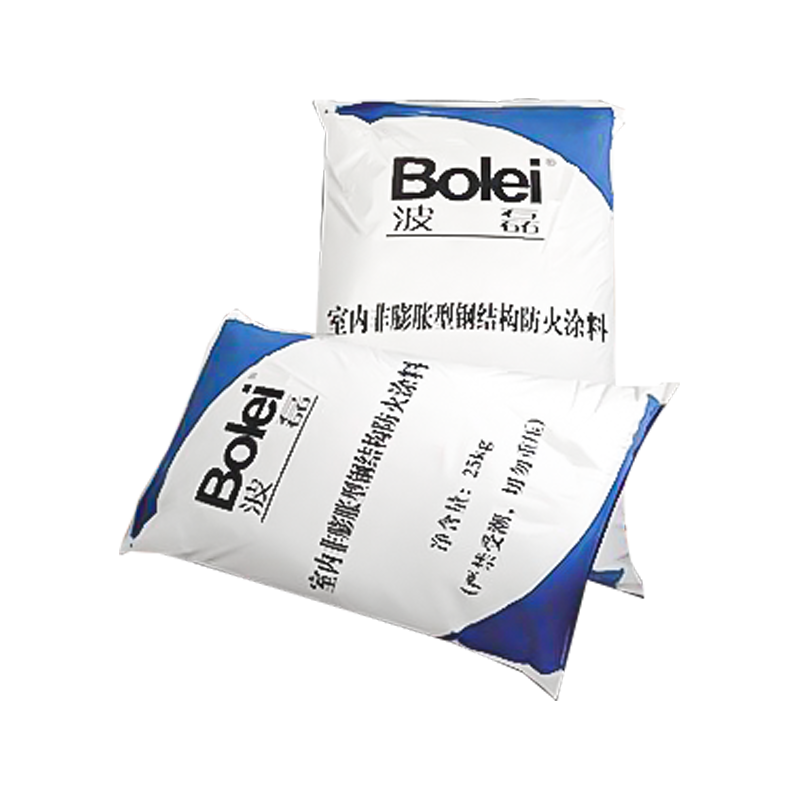 Cement-Based Thick Fireproof Coating for Steel StructuresA cement-based coating applied in thick layers to insulate steel structures, pipelines, bridges, and tunnels by slowing heat transfer. Robust and humidity-resistant, though typically overcoated in public buildings for washability and color.View Product →
When Should You Paint Over Fireproofing at All?
Overcoating is not vanity. In most specifications the topcoat is a functional layer with defined jobs, and four of them come up again and again across our projects.
Weather shielding
An approved topcoat blocks UV, rain and airborne pollutants that would slowly erode an exposed intumescent film. On exterior steel the topcoat is part of the fire protection system, not an optional extra.
Architectural color
Fireproof coatings ship in a limited palette. A topcoat in a specific RAL shade lets structural steel join the design language of the building instead of working against it.
Hygiene and washability
Airports, hospitals and food production areas need surfaces that tolerate regular cleaning. A sealed, washable finish keeps the fireproof layer intact while making maintenance practical.
Inspection and damage control
A light, even topcoat color makes impact damage, cracking and water staining obvious during inspections, so protective repairs happen before protection is actually lost.
One caution belongs here as well. Because the topcoat carries real functions, it should be specified at the same time as the fireproof layer, by the same party, with the same test documentation behind it. Retrofitting a decorative coat years later without revisiting the system paperwork is where most compliance problems quietly begin.
The Compatibility Rules That Decide Whether Overcoating Is Safe
Rule 1: The Rating Belongs to the System, Not the Paint
Fire resistance is proven in furnace tests and extended assessments, under standards such as EN 1363-1 and EN 13381-8 in Europe or ASTM E119 in North America, using a defined combination of primer, fireproof coating, and in many cases topcoat, at defined thicknesses. The certificate covers that combination and nothing else. This is why the only reliable answer to a compatibility question comes from the fireproof coating manufacturer in writing: which topcoat products are approved, at what maximum dry film thickness, and whether a sealer is required between the layers. Substituting a similar-looking topcoat from a different source is one of the most common, and most avoidable, ways a documented rating quietly stops being valid.
Rule 2: The Chemistry Has to Survive the Substrate
Two failure mechanisms account for most overcoating disasters. The first is saponification: oil-based and alkyd paints react with alkaline surfaces such as cementitious coatings and fresh gypsum, literally forming soap at the interface. The result is a film that stays tacky, browns, and detaches, often months after everyone has left the site. The second is solvent attack: strong solvent-borne topcoats can soften or partially redissolve water-based thin-film intumescents, causing wrinkling, lifting, or a permanently disturbed surface. Both failures are preventable with a small test patch, inspected after 48 to 72 hours, and by reading the data sheet instead of guessing.
Rule 3: Respect the Thickness Ceiling
Manufacturers set a maximum overcoat thickness for a physical reason. On intumescent systems the char has to expand freely; a thick, brittle topcoat cannot follow that movement, cracks, and can locally suppress the very reaction the coating exists to provide. On cementitious systems, an excessive sealed build can slow moisture release from the porous layer and cause blistering later. In practice, decorative overcoats are applied in several thin, even passes that add up to a modest total build, and every data sheet we issue states the ceiling explicitly. If a supplier cannot tell you that number, treat it as a procurement warning sign rather than a formality to skip.
How to Paint Over Fireproof Paint, Step by Step
The process resembles any careful recoating job, with a few fire-specific checkpoints inserted. On our projects the sequence looks like this.
Step 1: Identify the coating and find its paperwork
Confirm whether the layer is thin-film intumescent or thick cementitious or gypsum, and track down the product data sheet plus the fire test or assessment report. Every later decision depends on these two documents.
Step 2: Inspect and repair first
Check adhesion, cracks, water damage and impact marks. Damaged areas are reinstated with the same fireproof product until the required dry film thickness is restored. Never bury defects under a decorative coat; the topcoat preserves protection, it does not replace it.
Step 3: Clean gently
Remove dust, grease and contamination using methods the data sheet allows. Avoid aggressive blasting or wire brushing on thin-film systems, because sanding away part of a film that is only millimeters thick directly reduces the protection.
Step 4: Run a test patch
Apply the planned topcoat to a small, representative area and inspect it after 48 to 72 hours for lifting, wrinkling, softening or discoloration before committing the whole surface.
Step 5: Secure written approval
Ask the fireproof coating manufacturer to confirm the topcoat product, any primer or sealer, the maximum dry film thickness per coat and in total, and the minimum curing time before overcoating. Keep this letter in the project file.
Step 6: Apply thin and even
Work within the stated thickness range, allow the full recoat window between passes, and resist the temptation to hide the texture of a cementitious surface in one heavy coat. Two or three controlled passes beat one thick one every time.
Step 7: Document the work
Photograph the surface before and after, record batch numbers and dry film thickness readings, and file everything with the original fire documentation. Future inspectors, buyers and insurers ask exactly these questions.
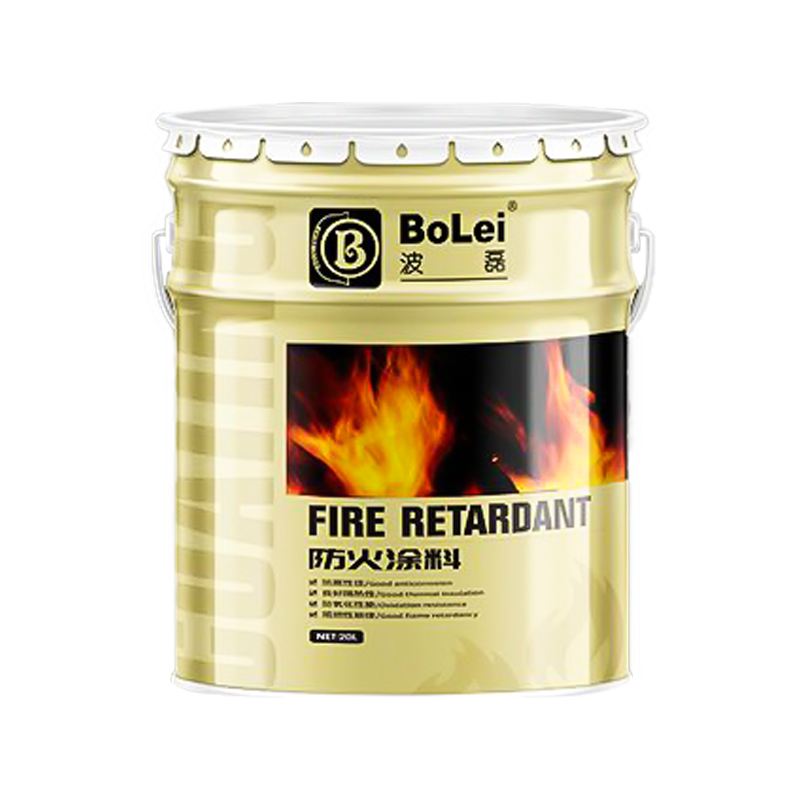 Solvent-Based Ultra-Thin Intumescent Fireproof CoatingThis thin intumescent coating expands under fire to form an insulating char, offering 30–120 minutes of protection with excellent decorative finish. Its weather resistance and compatibility with primers and topcoats make it ideal for exposed steel.View Product →
Topcoat Chemistries That Work, and the One That Does Not
Across steel structure projects, a small set of topcoat chemistries covers almost every approved overcoating scenario. The table below reflects the patterns we see most often. It is general guidance; the tested system documentation for your specific product always overrides it.
| Topcoat Chemistry | Over Thin-Film Intumescent | Over Cementitious or Gypsum | Practical Notes |
|---|---|---|---|
| Water-based acrylic | Widely approved | Widely approved, usually over a sealer | Flexible, low odor, easy future recoating |
| Acrylic polyurethane | Commonly approved within thickness limits | Approved in many systems | Better color and gloss retention on exposed steel |
| Two-pack epoxy | Only where the tested system allows | Used as a seal or scratch coat in heavy-duty zones | Harder film; verify flexibility over intumescent |
| Fluorocarbon | Specified for premium weathering jobs | Specified for landmark facades | Longest color retention; follow system limits strictly |
| Alkyd / oil-based | Not recommended | Not recommended | Saponifies on alkaline cement and gypsum surfaces |
The persistent exception is alkyd and other oil-based paint, which deserves its own warning. It remains popular because it brushes easily and looks rich, but on the alkaline surface of cementitious and gypsum fireproofing it undergoes saponification, and on some water-based intumescents the solvents cause swelling. Both failures tend to appear after the project team has moved on, which makes them expensive to correct.
For exterior architectural steel, acrylic polyurethane and fluorocarbon finishes dominate because they hold color and gloss under UV while staying flexible enough for an intumescent system. For interiors, water-based acrylic is the default: low odor, fast recoating, simple maintenance. For heavy-duty zones such as loading docks and plant rooms, a two-pack epoxy may be specified, but only where the tested system permits it, since epoxies cure to a harder, less forgiving film.
What Actually Happens in a Fire When There Is a Topcoat
Understanding the physics makes the rules feel less arbitrary. When an intumescent coating reaches its activation temperature, roughly in the range where a structural fire is just getting going, the film swells into a low-density insulating char. A product engineered for 20 times expansion turns a coating measured in microns into a protective layer measured in centimeters, and that expansion is what delays the steel underneath from reaching its critical temperature.
Now picture a thick, rigid topcoat sitting on that film. As the char expands, the decorative layer either stretches with it, if it was designed to, or fractures and interferes with it, if it was not. Cracks in the wrong place can vent the expanding char, and a heavy build can mechanically restrain it. This is the entire reason approved topcoats are flexible, thin, and listed by name in the system documentation.
Cementitious coatings behave differently: there is no expansion, and the layer insulates through its own mass. Here the topcoat plays a more passive role in the fire itself, but the chemistry still matters, because a film that has saponified or blistered off the surface offers no protection at all and exposes the porous coating to everything the building throws at it.
Ultra-Thin Intumescent Fireproof Coating with 20x ExpansionSpray-applied to exposed steel in terminals, lobbies, and gyms, this ultra-thin coating expands up to twenty times in fire, forming a porous char layer. Its thin film suits interior steel awaiting decorative overcoating in occupied buildings.View Product →What Large Steel Projects Teach About Overcoating Fireproofing
The pattern is remarkably consistent across the airport terminals, exhibition halls and stadiums we have supplied and coated. Exterior exposed steel carries its weathering topcoat from day one, because nobody wants to scaffold a terminal facade twice. Interior steel often receives its decorative coat in a second phase, after fit-out decisions settle, which makes it the classic renovation scenario: the fireproof layer has been in service for years, the building is occupied, and the client wants a color change without touching the rating.
In both cases, the project that runs smoothly is the one where the full system, fireproof coating, primer or sealer, and topcoat with thickness limits, was agreed between the manufacturer and the contractor before application started. The projects that struggle are the ones where a decorator arrived with an unapproved product and the team discovered the compatibility question only after half the hall had been coated. A real example of the planning-first approach is the fire protection painting for the Zhuhai airport terminal expansion, where coating selection and application sequencing were coordinated across a live construction program.
For anyone purchasing coatings for a project of this scale, the practical takeaway is to treat the topcoat as a line item in the fire protection specification, not as a decorator's afterthought. It costs nothing extra at order stage and removes the single most common source of rework.
Service Life, Inspection and When to Recoat
A well-applied intumescent system in a dry interior can serve for decades with nothing more than periodic inspection. Exposed exterior systems age faster, and their service life is essentially the service life of the topcoat: when the weathering layer chalks, thins or loses adhesion, the fireproof film underneath starts to follow. Cementitious coatings are extremely durable but suffer from impact and vibration, so plant rooms and car parks deserve a closer look than their theoretical lifespan suggests.
A sensible maintenance rhythm is an annual visual inspection, with a hands-on check of high-traffic and impact-prone areas every two to three years. Look for cracking, delamination, water staining, dusting and discoloration. The repair sequence never changes: reinstate damaged fireproof coating with the original product to the specified thickness, let it cure fully, then redecorate. Treating the topcoat as replaceable maintenance, while the fireproof layer beneath stays protected, is exactly the division of labor the system was designed around.
Do's and Don'ts That Keep the Rating Valid
Do
- Request written topcoat approval before surface preparation starts
- Repair and reinstate damaged fireproof coating before any decoration
- Run a test patch and inspect it after 48 to 72 hours
- Stay within the stated dry film thickness, per coat and in total
- File photos, batch numbers and thickness readings with the fire documentation
Don't
- Apply alkyd or oil-based paint over cementitious or gypsum fireproofing
- Put strong solvent-borne topcoats over water-based intumescent films without testing
- Paint over loose, cracked or contaminated areas to save preparation time
- Bury coating texture in one heavy pass and exceed the thickness ceiling
- Assume the rating survives unapproved changes because the paint looked fine
Frequently Asked Questions About Painting Over Fireproof Paint
Can you paint over intumescent paint with regular emulsion?
Often yes, but only if that emulsion is named as an approved topcoat in the system documentation. Flexible water-based acrylics are the most commonly approved decorative finishes over thin-film intumescent coatings. Regular wall paint is not automatically compatible: some formulations contain solvents that disturb the film, and any paint applied too thickly can crack when the char expands. Written approval plus a test patch settles the question in a day or two.
How long should I wait before applying a topcoat?
Until the fireproof coating is fully cured, which depends on film build, temperature and humidity. Thin intumescent films often need several days before overcoating, while thick cementitious layers, applied in centimeters rather than millimeters, may need considerably longer, and some are sealed only after an extended drying period. The data sheet states the minimum; when conditions are cool or humid, extend it. Overcoating too early traps solvents or moisture and causes blistering later.
Does painting over fireproof paint void the fire rating?
Not if the topcoat is approved by the fireproof coating manufacturer and applied within the tested specification. It can void the rating if an unlisted product is used, if the thickness exceeds the stated limit, or if the coating is damaged during preparation. The rating attaches to the documented system, so the paperwork you keep matters as much as the paint you apply.
Can you paint over fire retardant finishes on wood?
The same logic applies, with wood-specific details. Transparent and tinted fire retardant finishes for timber generally allow overcoating with compatible water-based products, while heavy solvent-based or tightly film-forming paints can block the surface chemistry the retardant relies on. Light cleaning is acceptable; aggressive sanding that removes the treated layer is not. As with steel, the finish manufacturer's approval for the specific timber system is the deciding document.
How thick can the decorative topcoat be?
Manufacturers typically set a maximum dry film thickness for overcoats, and on thin-film intumescent systems that ceiling is deliberately modest so the film can expand freely in a fire. The exact figure varies by chemistry and product, which is why it cannot be quoted responsibly as a universal number: it belongs in your system documentation, and if it is missing, request it in writing before painting starts. In general, several thin passes are always safer than one heavy coat.
Can a topcoat completely hide the texture of cementitious fireproofing?
It can soften the appearance but rarely erases it in one coat. The coarse surface of cementitious and gypsum coatings needs filling and sealing, often with a compatible sealer or filling coat, followed by two or more decorative passes. Even then a soft, organic texture usually remains, which many architects actually want. If a truly smooth finish is required, raise it at specification stage, because it affects both material quantities and the approved system.
Is spraying the topcoat acceptable?
Yes, and on large steel structures it is the standard method for both the fireproof layer and its topcoat, giving even thickness and a consistent finish. Airless spraying works well with water-based acrylics, while brushing and rolling remain fine for small areas and repairs as long as thickness stays within limits. Whichever method is used, verify dry film thickness with a gauge and record the readings.
Who is responsible if the fire protection is questioned years later?
Responsibility follows the documentation chain: the owner holds the fire strategy, the contractor holds the application records, and the manufacturer holds the product approvals and test reports. This is why the file matters. A complete set, covering the written topcoat approval, batch numbers, thickness readings and photographs, lets any of those parties demonstrate within days that the overcoating was done inside the approved system. Without the file, even correct work can be difficult to defend.
The Paperwork to Demand Before the First Coat Goes On
Every recommendation above compresses into one habit: get the system defined in writing before anyone opens a tin. The following short list has settled every overcoating dispute we have been part of.
- Written approval naming the topcoat product, any primer or sealer, and the maximum dry film thickness
- The fire test report or extended assessment reference covering the complete system
- Surface preparation and damage repair procedures specific to the fireproof coating
- Minimum curing times and recoat windows matched to the project conditions
- A maintenance guide stating inspection intervals and approved cleaning methods
As a coating manufacturer, we issue these documents as a standard part of supply for fire protection projects, and we would encourage the same standard from any supplier you work with. Steel that carries a fire rating is a safety asset with a paper trail, and a decorative topcoat, applied correctly, simply helps that asset last longer and look better while it does its job.

 ENG
ENG
QUICK LINKS
CONTACT INFO
-
 +86-17681892007
-
 [email protected]
-
 No.495-497, Ngaqian Road, Ngaqian Town, Xiaoshan District, Hangzhou, China
QR CODE
Copyright © Zhejiang Bolei Coatings Co., Ltd.All Rights Reserved.
 Wholesale Industrial Steel Paint Manufacturers