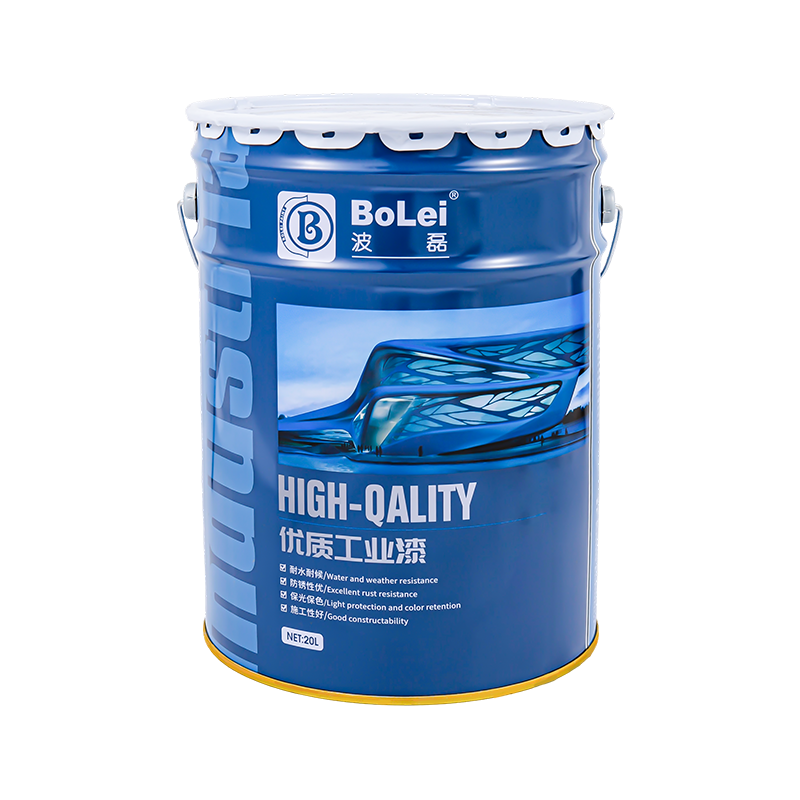
{config.cms_name} Home / Products / Anti-Corrosion Paint For Steel Structures / Anti-Corrosive Intermediate Paint / Highly Chlorosulfonated Polyethylene (CHS) Micaceous Iron Oxide Intermediate Paint
Highly Chlorosulfonated Polyethylene (CHS) Micaceous Iron Oxide Intermediate Paint
About Us
Zhejiang Bolei Coatings Co., Ltd.

 Founded in 1997, Zhejiang Bolei Coatings Co., Ltd. is a subsidiary of Bolei Industrial Group, with multiple subsidiaries engaged in coatings manufacturing, construction services, new material development, and international trade.
 As a professional paint manufacturer based in China, we specialize in anti-corrosion coatings, fireproof coatings, emulsion paints, epoxy floor paints, and JS waterproof paints, widely applied in both industrial and construction sectors.
 With advanced production facilities, a strict quality control system, and a stable raw material supply chain, we deliver high-quality and cost-competitive coating products and engineering solutions to our clients worldwide. 

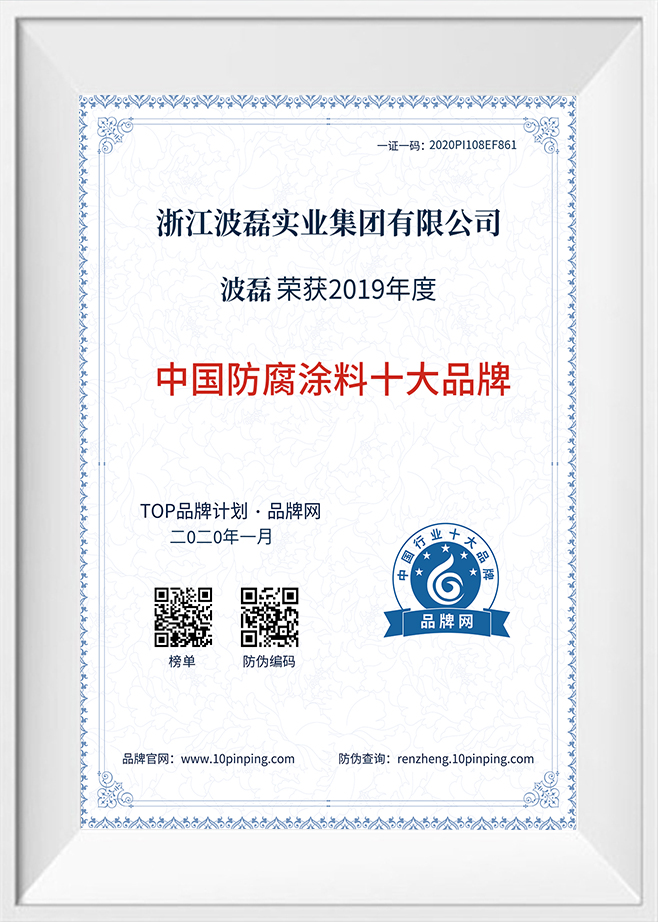
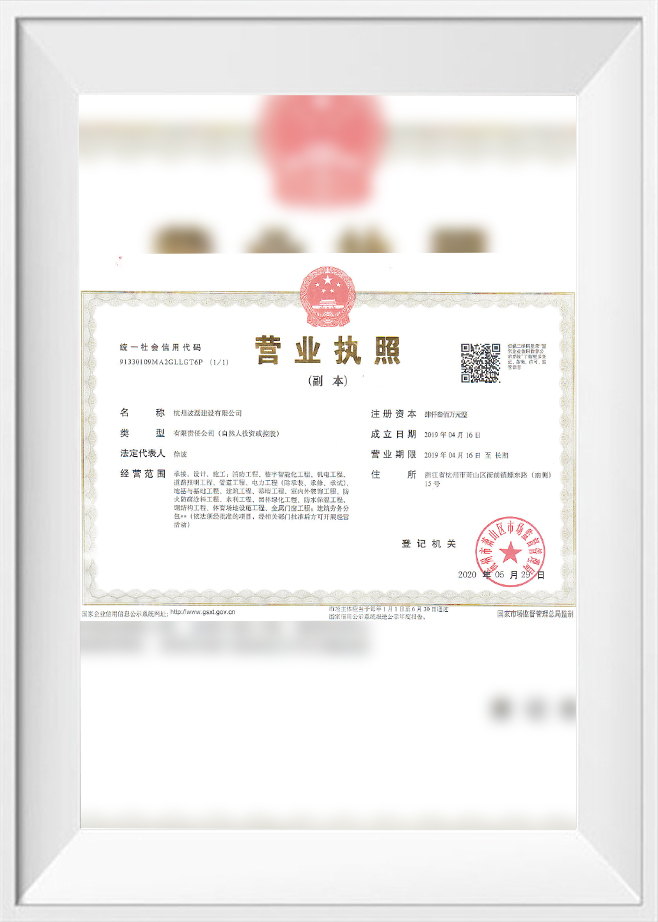
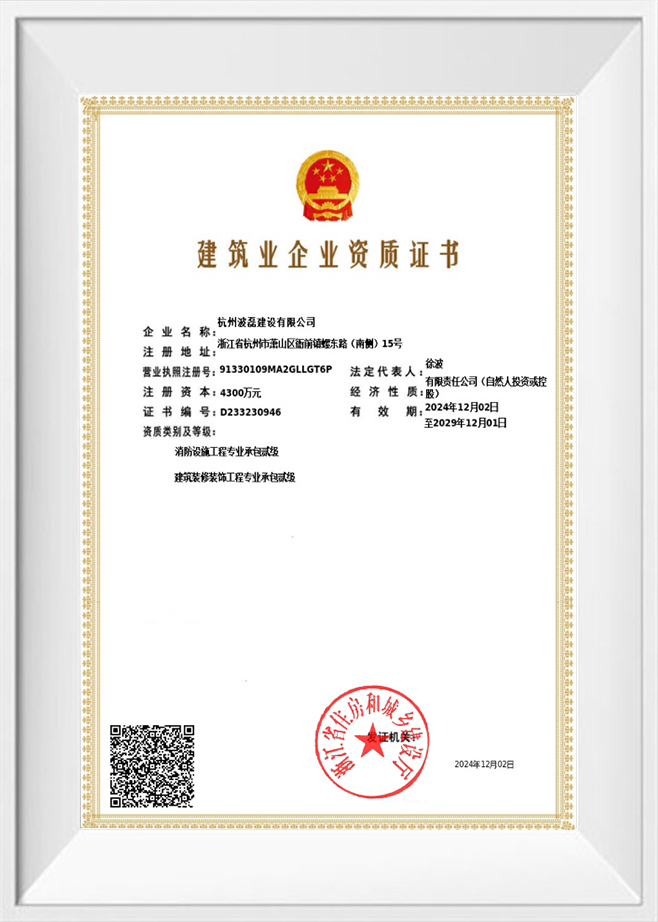
Certificate Of Honor
  • Top Ten Brands of Anti-Corrosion Coatings in China
  • Business License
  • Construction Enterprise Qualification Certificate
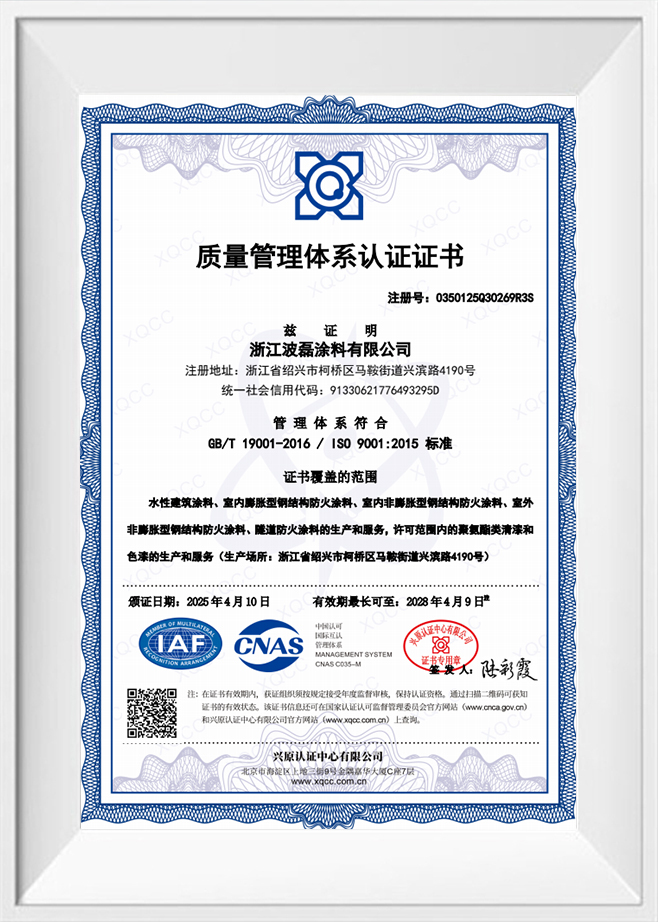
  • Quality Management System Certification Certificate
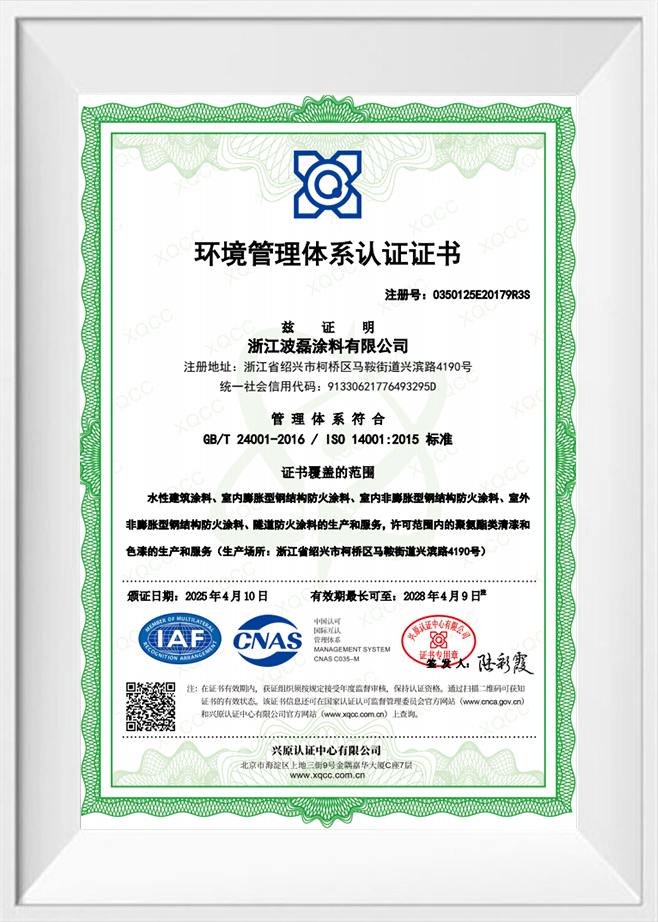
  • Environmental Management System Certification Certificate
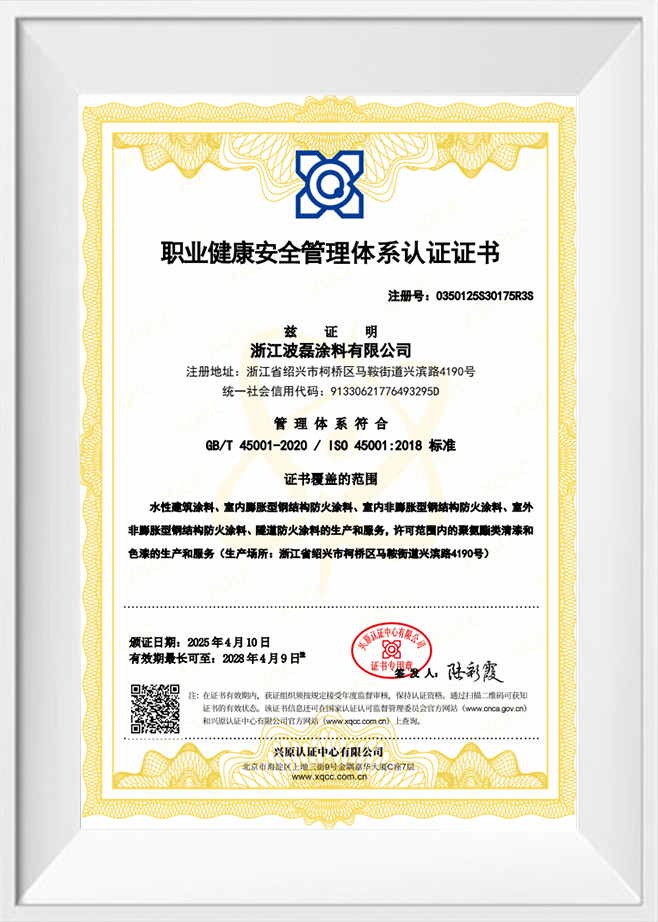
  • Occupational Health and Safety Management System Certification Certificate
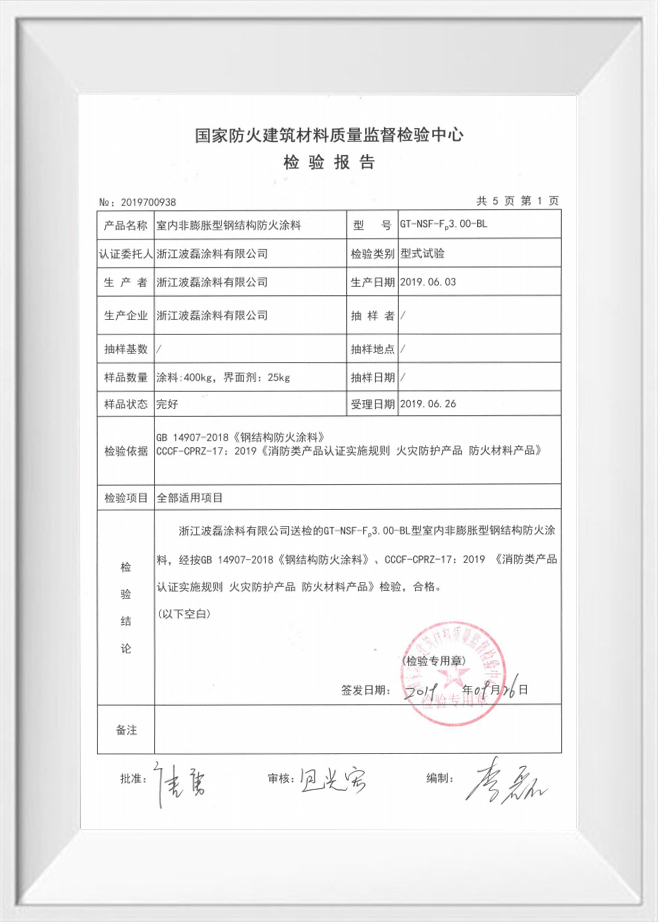
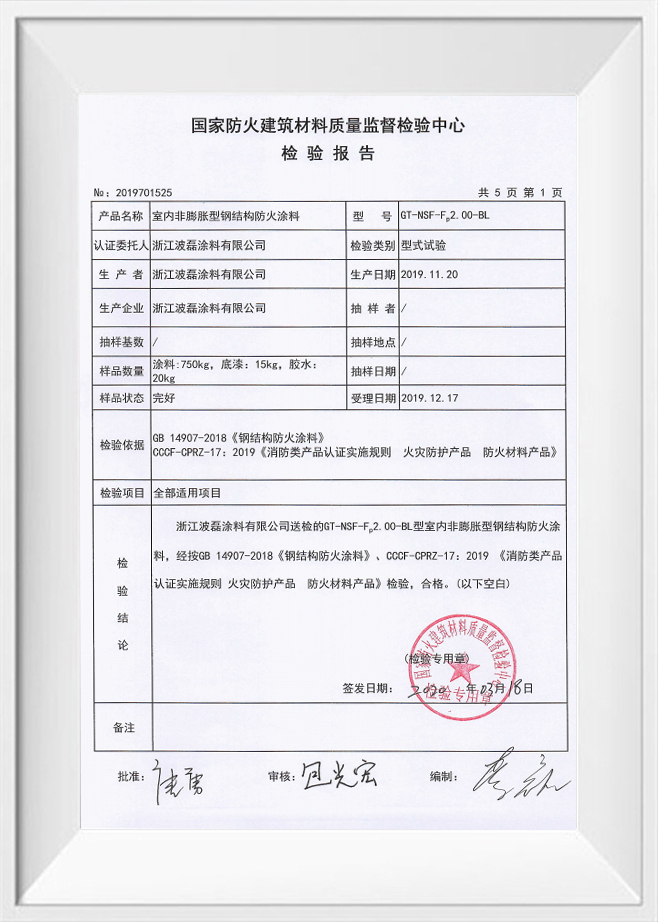
  • Inspection Report
  • Inspection Report
  • Inspection Report
  • Inspection Report
  • Inspection Report
  • Inspection Report
News
Anti-Corrosive Intermediate Paint Industry knowledge

What is Anti-Corrosive Intermediate Paint

Anti-Corrosive Intermediate Paint is an indispensable transition layer in high-performance coating systems. In a typical three-layer coating structure, it is precisely positioned between the anti-rust primer and the decorative topcoat. Zhejiang Bolei Coatings Co., Ltd., with years of deep experience in the anti-corrosion field, defines the function of the intermediate paint as a combination of structural reinforcement and physical barrier.

This type of coating usually features high solids content, providing a dry film thickness that far exceeds that of a primer. The Anti-Corrosive Intermediate Paint produced by Zhejiang Bolei Coatings Co., Ltd. specifically emphasizes filling performance, effectively compensating for microscopic irregularities on the primer surface and laying a solid foundation for the smoothness of the subsequent topcoat. In industrial anti-corrosion, the thickness of this intermediate layer directly determines the durable life of the entire protection system.

  • Core Function: Connects the upper and lower layers, enhances intercoat adhesion, and provides critical physical shielding.
  • Physical Characteristics: The paint film is tough, possesses good hiding power and sandability, and provides perfect support for the topcoat.
  • Chemical Composition: Usually based on epoxy resin, with special functional pigments such as Micaceous Iron Oxide (MIO) added.

Core Functions of Anti-Corrosive Intermediate Paint

In complex industrial environments, a single coating layer is often insufficient to handle long-term chemical erosion and physical wear. The core advantages of the Anti-Corrosive Intermediate Paint developed by Zhejiang Bolei Coatings Co., Ltd. are reflected in the following dimensions:

  • Increasing the Shielding Effect: By adding flake pigments (such as Micaceous Iron Oxide), a labyrinth-like barrier structure is formed within the coating. This significantly extends the penetration path for water vapor, oxygen, and corrosive ions to reach the substrate.
  • Improving Total Film Thickness: The anti-corrosion life is proportional to the total thickness of the coating system. Anti-Corrosive Intermediate Paint allows for a higher thickness in a single application, thereby significantly improving the weather resistance and protection period of the overall system.
  • Superior Adhesion Transition: It can relieve the stress generated between the primer and the topcoat due to thermal expansion and contraction or differences in chemical properties, effectively preventing coating blistering or large-scale peeling.
  • Optimizing Engineering Costs: As a highly cost-effective functional layer, the intermediate paint solutions from Zhejiang Bolei Coatings Co., Ltd. reduce the consumption of expensive topcoats without sacrificing any protective performance.
  • Leveling the Substrate: Industrial steel surfaces often have fine pits. Anti-Corrosive Intermediate Paint can effectively fill these defects, ensuring the overall continuity of the coating system.

Comparison of Common Anti-Corrosive Intermediate Paint Types and Performance

In practical engineering applications, Zhejiang Bolei Coatings Co., Ltd. provides various targeted Anti-Corrosive Intermediate Paint solutions for customers based on different environmental corrosion levels (ISO 12944 standards).

The following technical parameter comparison of three core intermediate paint products is intended to help you select the most suitable configuration based on project requirements:

Technical Indicators Epoxy Micaceous Iron Oxide (MIO) High Build (HB) Epoxy Modified Epoxy Intermediate
Main Function Physical shielding, labyrinth effect Fast film formation, defect filling Low-temp curing, multi-compatibility
Volume Solids 75% - 80% 80% - 85% 70% - 75%
Standard DFT 100 - 150 microns 125 - 200 microns 80 - 120 microns
Mixing Ratio (A:B) 4:1 or 5:1 4:1 3:1
Theoretical Coverage (@100 microns) 7.5 square meters/L 8.2 square meters/L 7.0 square meters/L
Salt Spray Resistance Over 1000 hours Over 800 hours Over 600 hours
Recommended Environment C4/C5 High Corrosion (Marine, Chemical) C3/C4 Industrial (Bridges, Tanks) C2/C3 General Industrial (Machinery)

Construction Process Key Points for Anti-Corrosive Intermediate Paint

To ensure that every bucket of Anti-Corrosive Intermediate Paint supplied by Zhejiang Bolei Coatings Co., Ltd. exerts its best protective effect, the construction process must strictly abide by the following technical specifications:

  • Substrate Treatment and Primer Inspection: Before spraying the intermediate paint, confirm that the primer has reached a surface dry state. If zinc salts appear on the primer surface, they must be removed by fresh water washing or mechanical sanding to avoid affecting the adhesion of the Anti-Corrosive Intermediate Paint.
  • Ratio and Ripening: As a two-component coating, the main paint and curing agent of the Anti-Corrosive Intermediate Paint must be mixed strictly according to the ratio. It is recommended to let the mixture ripen for 15 - 30 minutes to allow the chemical components to react fully before spraying.
  • Film Thickness Control: Operators should use wet film gauges for dynamic monitoring. Since Anti-Corrosive Intermediate Paint usually has a high film thickness, care must be taken to prevent sagging or solvent retention caused by local excessive thickness.
  • Environmental Window: The substrate temperature should always be at least 3 degrees Celsius above the dew point. The technical standards of Zhejiang Bolei Coatings Co., Ltd. suggest controlling the relative humidity below 80% to ensure the density of the coating.
  • Spraying Technology: High-pressure airless spray is recommended. This method can achieve a uniform and dense film thickness, especially suitable for large-area steel structure construction.

Typical Application Scenarios and Case Analysis

The Anti-Corrosive Intermediate Paint produced by Zhejiang Bolei Coatings Co., Ltd. has been widely used in multiple high-standard industrial fields. By customizing coating schemes for different environments, we ensure the structural safety of substrates under extreme conditions.

  • Large Bridges and Transportation Infrastructure: Bridges are exposed to high humidity and salt spray environments for long periods. Using Anti-Corrosive Intermediate Paint (especially the MIO type) can significantly enhance the anti-permeability of the coating. The solutions from Zhejiang Bolei Coatings Co., Ltd. effectively prevent moisture from reaching the steel base by increasing the labyrinth effect.
  • Petrochemical Storage Tanks and Pipe Galleries: Chemical plant environments contain corrosive acid and alkali gases. In this scenario, Anti-Corrosive Intermediate Paint serves as a high-build protective layer, resisting chemical splashes and erosion to ensure long-term stable operation of production facilities.
  • Marine Engineering and Shipbuilding: In extreme corrosion environments like C5-M, Zhejiang Bolei Coatings Co., Ltd. recommends high-solids Anti-Corrosive Intermediate Paint. Its excellent salt spray resistance is the core barrier against corrosion in sea spray zones.
  • Steel Buildings and Sports Stadiums: While pursuing long-term protection, the intermediate paint provides a solid foundation for various aesthetic topcoats.

In-depth Performance Parameter Comparison

To facilitate technical selection for engineers and purchasers, the table below shows a further physical performance comparison of several mainstream Anti-Corrosive Intermediate Paint products under Zhejiang Bolei Coatings Co., Ltd.:

Key Technical Indicators MIO Series (Epoxy) HB Series (High Build) Zinc Phosphate Intermediate
Anti-corrosion Mechanism Physical Barrier Filling and Sealing Shielding + Inhibition
Solids by Volume 80% plus/minus 2% 85% plus/minus 2% 72% plus/minus 3%
Recommended DFT (Single Layer) 100 - 150 microns 150 - 250 microns 60 - 100 microns
Max Temperature Resistance 120 degrees C 100 degrees C 100 degrees C
Drying Time (23C, Touch Dry) 2 - 3 hours 4 - 6 hours 1.5 - 2 hours
Applicable Substrate Zinc-rich primer, inorganic zinc Various primers, old paint Steel, Stainless, Aluminum
Intercoat Adhesion (Pull-off) Equal to or over 5 MPa Equal to or over 6 MPa Equal to or over 4 MPa

FAQ

Q: Why can't I skip the intermediate paint and apply the topcoat directly?
Zhejiang Bolei Coatings Co., Ltd. experts suggest: Primers are mainly responsible for chemical rust prevention, while topcoats focus on weather resistance and aesthetics. Both are usually insufficient in thickness. Without Anti-Corrosive Intermediate Paint, the overall film thickness is inadequate, leading to pinholes and premature failure.

Q: Can Anti-Corrosive Intermediate Paint be left outdoors as a final coat?
Zhejiang Bolei Coatings Co., Ltd. technical advice: Most epoxy-based Anti-Corrosive Intermediate Paints do not have UV resistance. If exposed to sunlight for a long time, the coating will chalk. Therefore, they must be used with weather-resistant topcoats like polyurethane or fluorocarbon.

Q: What causes sagging during the application of Anti-Corrosive Intermediate Paint?
This is usually caused by excessive thickness in a single pass or too much thinner. Zhejiang Bolei Coatings Co., Ltd. recommends strictly controlling the thinning ratio (usually no more than 5%) and applying in layers according to the required DFT.

Q: How do you ensure the performance of Anti-Corrosive Intermediate Paint in old paint renovation?
When overcoating old layers, an adhesion test must be performed. The modified epoxy Anti-Corrosive Intermediate Paint from Zhejiang Bolei Coatings Co., Ltd. has excellent compatibility, but it is still necessary to ensure the old paint surface is free of chalking and oil before large-scale construction.

Q: Why is Micaceous Iron Oxide intermediate paint usually grey or reddish-brown?
This is determined by the natural color of its core component Micaceous Iron Oxide (MIO). Although this color is not decorative, it is a visual sign of the high-performance shielding capabilities of the Anti-Corrosive Intermediate Paint.

Q: How long after spraying Anti-Corrosive Intermediate Paint can the topcoat be applied?
This depends on the ambient temperature. At 25 degrees Celsius, it is generally recommended to apply the topcoat after 16 - 24 hours. Zhejiang Bolei Coatings Co., Ltd. suggests that the maximum overcoating interval should not exceed 7 days; otherwise, the surface needs to be treated again.

Q: What role does MIO play in Anti-Corrosive Intermediate Paint?
MIO has a unique flake-like structure. Once the coating cures, these flakes overlap like fish scales, forcing water vapor and corrosive media to take a detour, which greatly enhances the anti-permeability of the coating.

Q: What should be done if the paint is too viscous during construction?
An appropriate amount of matching thinner from Zhejiang Bolei Coatings Co., Ltd. can be added (recommended ratio not exceeding 5% - 10% of the total). Over-thinning will severely reduce the dry film thickness and affect the anti-corrosion lifespan.